
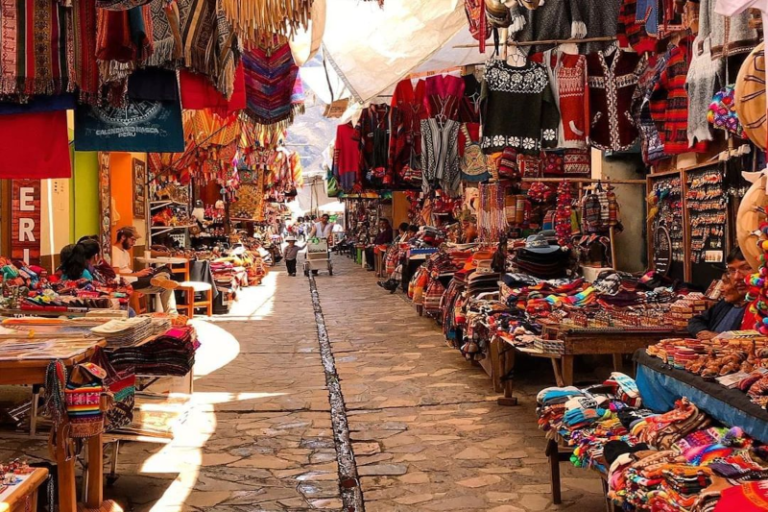

Pisac Market Peru can feel like a happy overload. Blankets stacked in bright piles. Belts and bags swaying in the breeze. A mix of Spanish, Quechua, and that universal travel language: “How much is this?”
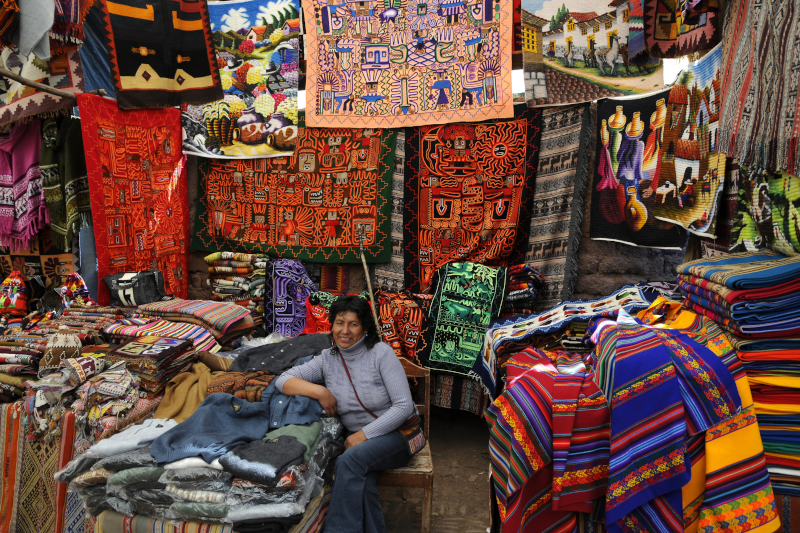
And here’s the thing—Pisac Market is amazing, but it’s also easy to get fooled. Some stalls sell work made by local artisans in the Sacred Valley. Others sell factory-made souvenirs that look the part… until you get home and the “alpaca” scarf pills like crazy. So, how do you shop with confidence without turning your day into a full-time detective job?
Let me walk you through it. We’ll keep it practical, human, and a little fun.
Mini-outline (so your brain can relax)
- First: what the market is like, and when it feels most alive
- Then: quick checks for peruvian textiles, silver, and ceramics
- Next: bargaining without getting awkward
- After that: pairing the market with Pisac ruins
- Finally: a short FAQ (the stuff people ask every single day)
Why Pisac Market is great (even when it’s a bit messy)
Pisac Peru sits in the Sacred Valley, about an hour from Cusco. It’s small, but it has energy. The market doesn’t stay in one tidy building. It spills out across the plaza and down side streets like it can’t help itself.
That spill is part of the charm. You can browse a row of scarves, then turn a corner and find giant kernels of corn, herbs, and vendors selling snacks to shoppers who clearly forgot breakfast (been there).
Now for a mild contradiction: the market is both authentic and touristy. Sounds odd, right? But it makes sense. Some sellers are makers. Some are resellers. And some are a mix—because supply chains, even in a mountain town, can get complicated.
If you want the classic “big market day” vibe, Sunday is the headline act. But weekdays can be better for chatting and asking questions without a crowd pressing in behind you.
How to get to Pisac Market from Cusco (simple version)
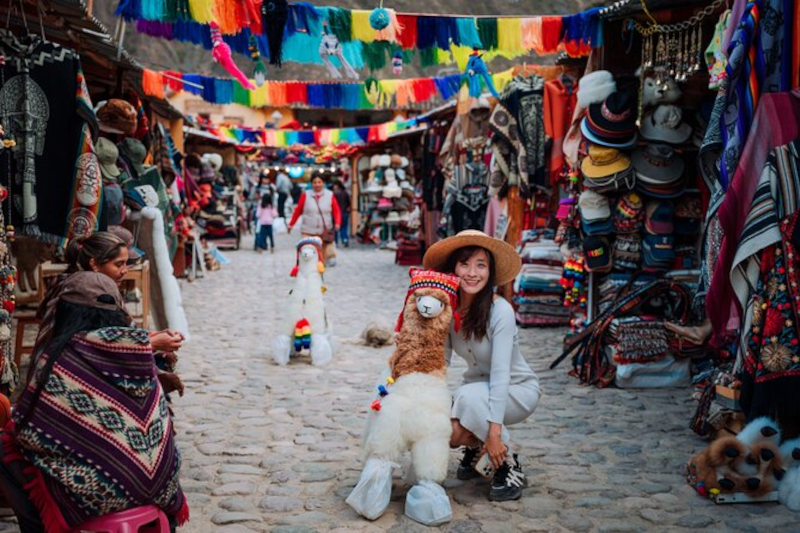
If you’re Googling how to get to Pisac Market from Cusco, the budget answer is a collectivo (shared van). They commonly leave from around Puputi Street in Cusco. You hop in, pay a few soles, and you’re usually there in about 45 minutes.
Quick travel admin (the kind nobody wants, but everybody needs): save “Mercado de Pisac” in Google Maps before you lose signal, and carry small bills. Change is oddly hard to come by, and it can slow everything down.
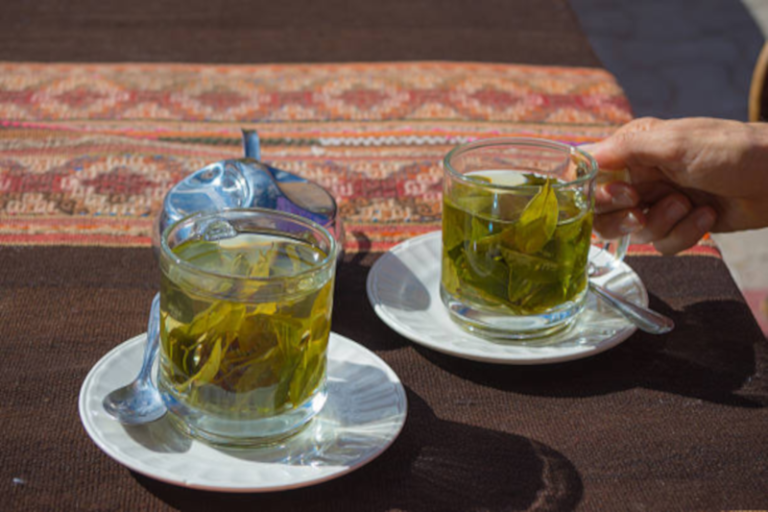
One more practical note: altitude. Pisac is lower than Cusco, so many people feel better there. Still, you might get that slightly floaty feeling. Drink water or coca tea. Walk slower than your ego wants. You’ll enjoy the market more.
Textiles: the easiest place to overspend (and the easiest place to win)
If you came for peruvian textiles, you’re not alone. Ponchos, scarves, blankets, table runners—Pisac market has them all. The problem is that the word “alpaca” gets used like a marketing sticker. Sometimes it’s true. Sometimes it’s… hopeful.
So instead of trusting labels, do a quick “QA check” with your hands:
- Feel: Alpaca and wool often feel cool at first, then warm up. Acrylic tends to feel warm right away and can feel a bit plasticky.
- Drape: Real wool hangs with a natural weight. Cheap synthetics can feel light and stiff, like they’re trying too hard.
- Look close: Hand-woven pieces usually have tiny quirks. Not mistakes—more like fingerprints of the person who made it.
Colors help, too. Natural dyes often look deep and earthy, not neon. If something screams highlighter pink, ask what it’s dyed with. A good seller won’t mind. They might even light up a little because someone’s finally asking about the craft, not only the price.
Small digression that’s worth it: if you have time elsewhere in the Sacred Valley, a weaving cooperative visit (Chinchero is famous for this) can reset your “value meter.” When you see how long spinning and weaving take, prices at Pisac start to make more sense. Not cheap, but fair.
Silver: “alpaca silver” is a trap name
Jewelry is everywhere at Pisac Market. Some pieces are great. Others are… shiny distractions. If a vendor says “alpaca silver,” know what that means: it’s not silver. It’s an alloy that looks silver-ish.
If you want real sterling, look for a stamp: 925 (most common) or 950. No stamp? Ask. If the answer gets fuzzy, that’s your cue to move on. The market is big. Your time is not.
Here’s a good sanity check: if it looks like sterling and costs the same as a coffee back home, it probably isn’t sterling.
Ceramics and little art pieces (the “print vs paint” question)
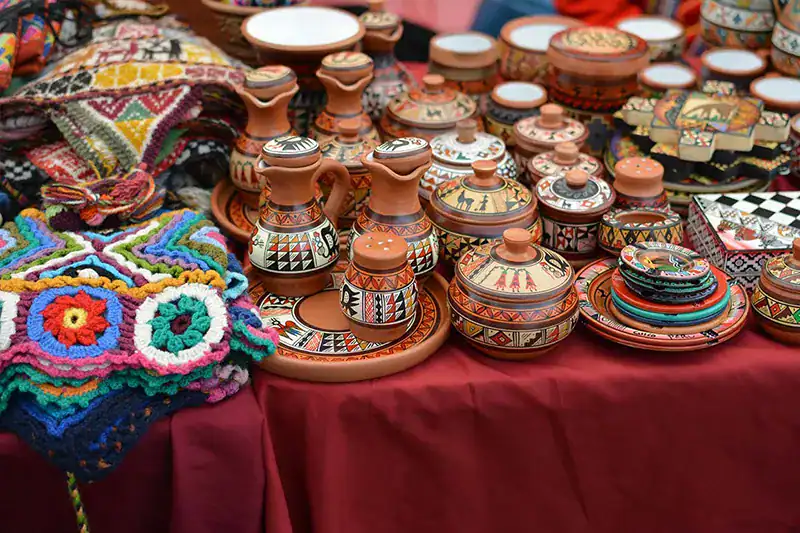
Ceramics can be a sweet souvenir because they feel personal. A mug you’ll use. A small bowl that reminds you of the Sacred Valley every time you toss your keys in it.
To tell hand-painted from printed designs, look at the lines. Hand-painted strokes usually vary a bit. Printed patterns can look too clean, too perfect. Sometimes you’ll even see a faint edge where a decal sits.
And yes, you can ask who made it. Even a simple “Hecho por quién?” nudges the conversation toward real craft.
What to buy at Pisac Market (the realistic list)
People ask what to buy at Pisac Market like there’s one right answer. There isn’t. But there is a smart short list—things that travel well and feel worth it later:
- A scarf or small throw you’ll actually use (big blankets are gorgeous, but they eat suitcase space)
- Stamped silver jewelry (925/950) if you like the workmanship
- Small ceramics that you can wrap in clothes and carry carefully
What I’d be cautious with: ultra-cheap “baby alpaca” deals, and anything that looks identical across five stalls. That usually means mass-made stock.
Quick food pause (because hunger makes bad buying choices)
Here’s a weird truth: the fastest way to buy junk is to shop hungry. So take a break. Walk toward the produce side. Try choclo with salty cheese. Grab fresh juice from a stand that’s busy (crowds are a decent clue).
And if you spot wood-fired empanadas nearby, go for it. Warm, flaky, and exactly what your feet want after an hour on cobblestones.
Bargaining: keep it friendly, keep it fair
Bargaining at Pisac market is normal. But it’s not a game show. You’re not negotiating a corporate contract—though a little negotiation logic helps. Think of it as finding a fair price that respects the work.
A simple script that works:
- Ask the price with a smile.
- Counter around 20%–30% lower, especially if you’re buying more than one item.
- Meet somewhere in the middle and pay in cash when you can.
Now the second contradiction: sometimes you shouldn’t bargain much. If the seller clearly made the item, and the price feels fair, paying it is the cleanest way to support local artisans. Honestly, that’s the moment where a souvenir turns into a story.
Pair it with the ruins (because you’re already in Pisac)
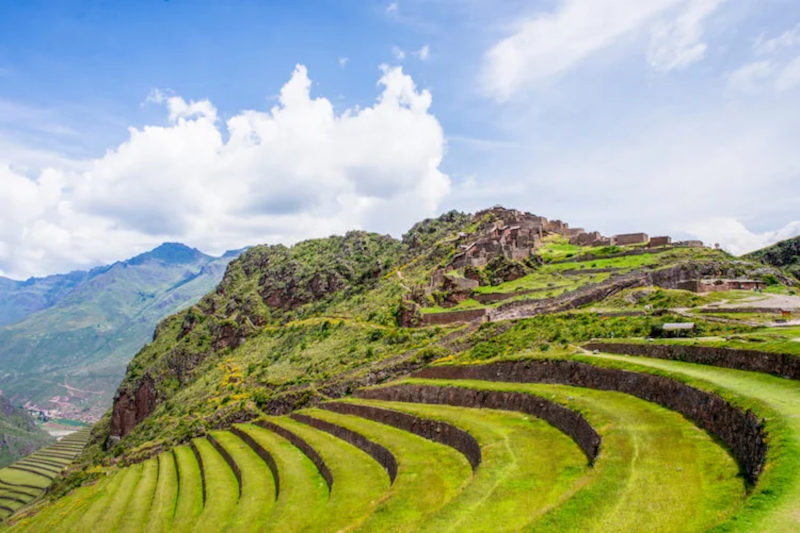
After shopping, the Pisac ruins are an easy “yes.” They sit above town, with views that make you stop mid-sentence. You can taxi up, explore the terraces and stonework, then hike down if you’re feeling good. The downhill walk often takes about an hour, depending on your pace (and how often you pause to take photos).
One practical note: entry can be tied to the Cusco Tourist Ticket (Boleto Turístico). Details can change, so check with your hotel, a local agency, or recent Tripadvisor reviews before you go. It’s boring prep. It saves time.
FAQ (short, on purpose)
What is great about Pisac Market?
It’s great because it’s lively and varied—local artisans, bold textiles, food stalls, and a real Sacred Valley feel in one place. Sundays are the loudest and busiest, but any day can be rewarding.
How to get to Pisac Market from Cusco?
Take a collectivo (shared van), commonly from around Puputi Street in Cusco. It’s usually about 45 minutes. Taxis and tours are easier, but cost more.
What to buy at Pisac Market?
Hand-made peruvian textiles (alpaca or wool), stamped sterling silver (925/950), and small ceramics are solid picks. If the price seems too good for “baby alpaca,” be skeptical and ask questions.