
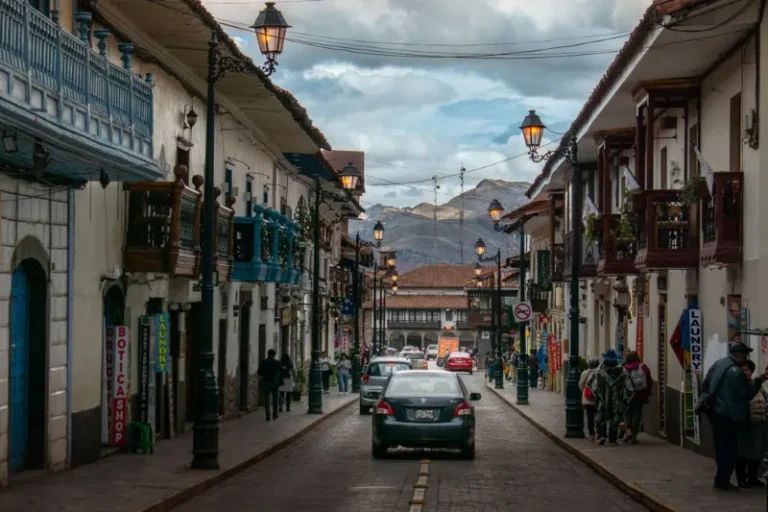
Cusco’s cobblestone streets don’t look like a history book. They feel like one. Two civilizations crashed into each other here in the 16th century and what came out the other side exists architecturally nowhere else on earth. The colonial houses in Cusco are where that crash is most readable.
Whitewashed walls sitting on precisely fitted Inca stone. Carved wooden balconies. Catholic doorways with indigenous symbols carved quietly into them by the same hands that were supposed to be carving only European motifs. Every facade is an unresolved argument frozen in stone and wood.

The Historical Fusion: Two Empires in One City
Spanish conquistadors arrived in 1533 and found stone craftsmanship that genuinely stopped them. Rather than demolishing it, they built on top. Practical on the surface, deeply deliberate underneath.
Why Did Spaniards Build on Inca Foundations?
Inca stonework was already perfectly leveled, already sturdy, already there. Using it saved enormous labor and time. That part is straightforward.
What mattered more was the symbolism. Spanish mansions built directly on the ruins of Inca royal palaces sent one clear message. New empire sitting physically on the old one. Walk through the historic center today and that decision shows up on every block, ancient andesite forming the bottom half of buildings with white stucco completing the top.
Incan versus Spanish Masonry Techniques
Inca masonry cut and polished stone to fit together without mortar of any kind. Gravity and interlocking geometry held everything together. No binding material, no shortcuts, just precision applied consistently across millions of individual joints.
Spanish masonry used mortar to bind rubble, adobe, and plaster together, then covered it in white paint. Faster to build and perfectly decent looking. But vulnerable to earthquakes in ways that became catastrophically obvious within decades. Incan versus Spanish masonry techniques represent two completely different understandings of what a wall is actually supposed to do.

Defining Features of Cusco’s Colonial Architecture
Knowing the primary Spanish colonial architecture characteristics changes what a walk through the historic center actually delivers.
The Heart of the Home: Courtyards
Almost every prominent colonial home was organized around a central courtyard brought directly from Andalusia. It landed in the Andean climate better than anyone planned for. The traditional courtyard layout benefits are genuinely practical at 11,000 feet above sea level.
Enclosed space captures high-altitude sun during the day and holds warmth through the freezing nights. Rooms open directly into the courtyard rather than through hallways. During turbulent colonial times the courtyard provided something else entirely, a completely private world shielded from whatever was happening in the street outside.
Iconic Wood Carved Balconies
Look up near the Plaza de Armas and the iconic wood carved balconies are immediately obvious jutting from second story facades. Cedar brought up from cloud forests below, functioning as status symbols as much as anything structural.
These balconies let women of the household watch street life and religious processions below without being visible themselves. A Moorish tradition that made the long journey from Spain to the Peruvian highlands without losing any of its original logic.
Mestizo Facade Design Elements
Local artisans were instructed to carve European symbols and did exactly that. They also added their own quietly alongside without asking permission. Mestizo facade design elements feature Catholic crosses sitting next to carved papayas, monkeys, pumas, and Inti worked into the same composition as if they belonged together naturally.
That quiet rebellion produced a style that exists nowhere else and couldn’t have been produced anywhere else. It required exactly this specific collision of two cultures and one set of artisans deciding what to do with the gap between instruction and execution.

Earthquake Resistant Colonial Engineering
The 1650 and 1950 earthquakes hit every building in Cusco at the same time. Pure Spanish structures built with rigid mortar collapsed. The hybrid buildings, Inca foundations with Spanish upper structures, stood.
Nobody planned the earthquake resistant colonial engineering that saved those buildings. It was an accidental consequence of stacking two completely different building philosophies. Inca walls with mortarless joints shifted during tremors and settled back afterward. The ancient builders got credit for seismic engineering completed centuries before the earthquakes they unknowingly designed against.
Art and Culture Inside the Mansions
Cusco School of Art Interiors
Walking into a preserved colonial mansion is a fast drop into the 17th century. The Cusco school of art interiors carry dramatic colors, heavy gold leaf known as brocateado, and religious content quietly loaded with indigenous elements that Spanish patrons either didn’t notice or chose not to address.
The Virgin Mary painted in a triangular shape that echoes the Apus. The Last Supper with guinea pig on the plate rather than bread and wine. Indigenous artists hired to produce Catholic doctrine were running a parallel project in plain sight for generations without interruption.
Andean Baroque vs Spanish Style
Pure Spanish residential style went for geometric proportions and classical restraint. Clean lines, white walls, nothing excessive. Andean Baroque vs Spanish style is the difference between that and covering every available surface with deeply carved tropical fruits, indigenous faces, and swirling vines until no empty space remains.
More emotive, more textured, more locally grounded. Impossible to confuse with anything purely European once the difference has been explained.

Exploring the Streets: A Guide for Architecture Lovers
Embark on a San Blas Architectural Walking Tour
San Blas sits a few steep blocks above the Plaza de Armas and runs on different logic than the tourist circuit below it. A self-guided San Blas architectural walking tour is the most honest way to experience what these buildings actually look like at close range.
White-washed walls with red geraniums spilling out of terracotta pots. Doors painted in blues and greens that have no business looking that good against old stone. Original cobblestones winding through alleys narrow enough that two people walking in opposite directions have to negotiate the space. The historical character of Cusco is more readable here than anywhere else.
How to Identify Authentic Colonial Masonry
How to identify authentic colonial masonry versus modern recreation is a question worth knowing the answer to before wandering the streets:
- The Seam: The horizontal line where perfect mortarless Inca stone ends and rougher mortared Spanish adobe begins. That specific transition is the authentic marker of 16th-century construction.
- Wall Thickness: Authentic colonial adobe walls reach up to three feet wide, built thick enough to carry heavy terracotta tile roofs.
- Doorway Proportions: Massive double wooden doors sized originally for horses and carriages, with smaller pedestrian doors cut directly into them for daily use.
Preservation and Modern Life in Historic Cusco
UNESCO Preservation Rules for Homes
The UNESCO preservation rules for homes in the historic center hit property owners hard when they first encounter them. Facade alterations prohibited. Paint colors strictly regulated. Original materials required for all repairs without exception.
A collapsed colonial roof cannot be replaced with anything modern. Traditional terracotta tiles only. These rules keep the city visually intact while placing real and ongoing financial burden on the people actually living inside these buildings every day.
Restoring Heritage Properties in Peru
Restoring heritage properties in Peru means finding specialized architects who still know traditional adobe and wood-carving techniques. That pool of people keeps getting smaller. Every project requires Ministry of Culture approval and archaeologists on-site throughout the work.
A routine plumbing renovation regularly turns up Inca pottery and shuts down construction for months. Experienced restoration architects build those delays into their project timelines as standard practice because it happens consistently enough to count on.
Luxury Boutique Heritage Hotel Stays
Colonial mansions converted into hotels have funded restoration that private ownership alone couldn’t have managed. Luxury boutique heritage hotel stays at properties like Palacio del Inka, Inkaterra La Casona, and Monasterio put guests in rooms that once housed people who participated in the events that shaped this city.
Restored courtyards, original Cusco school paintings still on the walls, iconic wooden balconies maintained rather than swapped out for something easier to maintain. Staying in one of these properties directly funds preservation of architecture that would otherwise be financially impossible to keep standing.

Conclusion
The colonial houses in Cusco are a conversation between two civilizations that never reached a conclusion. Inca stones holding up Spanish adobe walls. Catholic doorways carved with Andean symbols by indigenous artisans who understood exactly what they were doing and did it anyway for generations.
The earthquake-resistant engineering, the Cusco School painting traditions, the preservation battles running underneath all of it. Put those together and a walk through the historic center becomes something considerably harder to forget than a pleasant afternoon among old buildings. Two worlds met exactly there and neither one entirely won.