

Thousands hike to Machu Picchu every year with their eyes fixed on the finish line. That instinct consistently misses what separates this trail from every other multi-day hike on the planet. The archaeological centers on the Inca Trail aren’t rest stops between campsites. They’re the actual point of the journey.
Ancient royalty, soldiers, and relay runners covered this same ground for centuries before tourism existed. Understanding that before taking the first step changes what every subsequent step actually feels like.
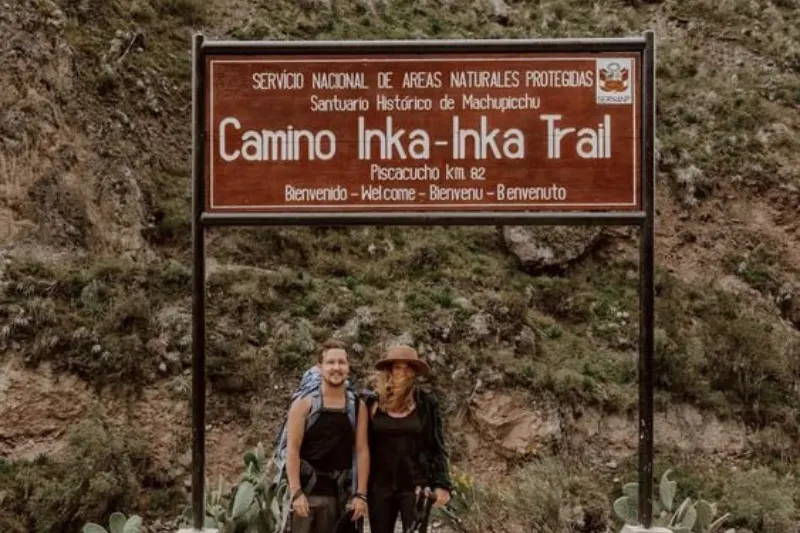
The Magic of the Ancient Inca Trails
Today’s hiking path is a fragment of something far bigger. The hidden gems along the Qhapaq Ñan network once covered over 30,000 kilometers from Colombia down to Chile. Not scenic trails. The logistical backbone of a continent-spanning empire moving military convoys, trade goods, and encoded messages across terrain that modern infrastructure still finds difficult.
Around a dozen major Inca trail sites mark the classic route, building in architectural complexity as the citadel draws closer. That progression from simple guard posts to elaborate religious temples is one of the more remarkable things about the route and worth slowing down for rather than rushing past.
The religious significance of the Sacred Valley route shaped every construction decision made here. This trail was designed to mirror the Milky Way and honor the Apus, mountain peaks treated as living protective deities rather than backdrop scenery. That cosmological logic shows up in the orientation of every major structure encountered along the way.
Major Inca Ruins Along the Classic 4-Day Trek
Day 1: The Gateway to the Past
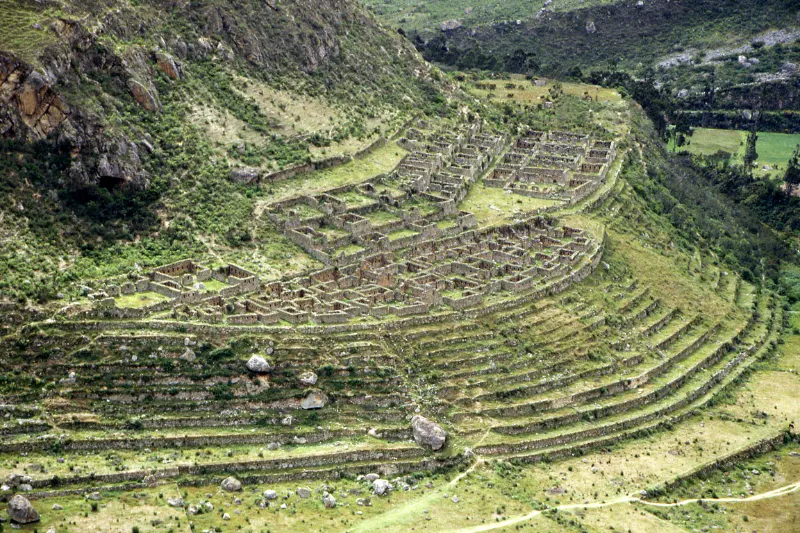
Llactapata and Patallacta rise from the Urubamba valley on the first day, massive agricultural terraces translating as High Town and Elevated Town in Quechua. These settlements grew maize, potatoes, and quinoa for the surrounding region and passing military convoys. No description fully prepares a visitor for the scale of the terracing, which converted steep unusable mountainside into productive farmland through engineering precision rather than brute force.
Day 2: The High Passes and the Messengers
Dead Woman’s Pass gets all the attention on day two. Runkurakay on the other side gets considerably less than it deserves. Semi-circular ruins perched on a rocky outcrop after the high pass, serving simultaneously as resting place, checkpoint, and strategic lookout without separating those functions into different buildings.
The historical purpose of Runkurakay tambo connects directly to how Chasqui stations during the Inca Empire functioned as a communication network. Relay runners carried messages encoded on knotted strings called quipus. Each station provided rest, food, and a fresh runner to carry the message forward. Information moved from the Pacific coast to Cusco in days through that chain without any written language involved anywhere.
Day 3: Into the Cloud Forest
Day three transitions from arid alpine terrain into dense biodiverse cloud forest and most people call it the best day of the entire trek. Sayacmarca clings to a sheer cliff edge surrounded by steep drops, serving residential, military, and religious functions simultaneously in the way Inca construction characteristically refused to separate those categories.
Avoiding crowds at Sayacmarca lookout requires working with a guide on timing. Arriving slightly ahead of the main trekking groups early in the morning, or pausing nearby for lunch before entering, are the two approaches that consistently produce the experience the site actually offers rather than a shared viewpoint with fifty other hikers.
High Altitude Marvels: Phuyupatamarca and Wiñay Wayna
The Cloud-Level Complex of Phuyupatamarca
Town in the Clouds earns the name completely. Sitting at over 3,600 meters and wrapped in thick fog for much of the day, Phuyupatamarca operates on its own atmospheric terms. The best time of day to photograph Phuyupatamarca ruins is just after dawn when morning mist rolls through curved terraces in ways that no midday light replicates.
Ceremonial platforms near the top were precisely aligned with winter and summer solstices and specific constellations. Not decorative alignment. Functional astronomical knowledge built directly into the stonework by people who treated the sky as infrastructure rather than aesthetic backdrop.
Wiñay Wayna: Forever Young
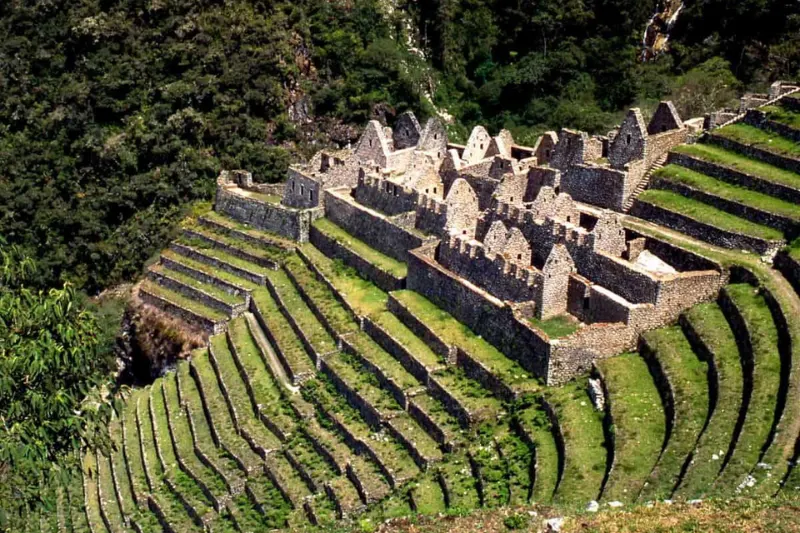
Forever Young in Quechua, and the name lands differently once the site appears around a bend in the trail after hours of walking. Steep plunging terraces and intricate stone structures consistently make hikers stop longer here than they planned to.
The pristine preservation of original water channels in Winay Wayna is what stops specialists mid-sentence. Ancient aqueducts still channel fresh mountain spring water through ceremonial stone baths using drop structures engineered to slow water flow and prevent hillside erosion. Five centuries old and still functioning without modern maintenance of any kind.
Comparing Wiñay Wayna and Machu Picchu masonry reveals the Inca construction hierarchy directly in the stonework. Machu Picchu uses seamless ashlar stones fitted without mortar in its most sacred sections. Wiñay Wayna uses a cellular style with clay mortar, slightly rougher but engineered so precisely to the mountain incline that centuries of torrential rain and earthquakes haven’t shifted anything.
Reaching the Climax: Inti Punku and Machu Picchu
The spiritual significance of Inti Punku Sun Gate only makes complete sense after four days on the trail. Originally a heavily guarded control gate for elites entering the sacred city, it was deliberately positioned to frame Huayna Picchu in the background when approached from the path. Intentional framing, not coincidental composition.
For Inca nobility, passing through marked a transition from outer world into sacred protected space. For modern hikers it delivers the first glimpse of Machu Picchu after days of sustained physical effort. That timing changes how the view registers in a way that arriving by bus from Aguas Calientes simply cannot replicate regardless of how the photographs turn out.
Practical Tips for Modern Trekkers
Reading the stonework before arriving transforms what the ruins actually communicate. A quick guide to interpreting Quechua architectural styles makes each site considerably more legible than approaching it cold:
- Imperial Style: Perfectly fitted polished mortarless stones reserved for sacred temples and royal quarters.
- Cellular/Rustic Style: Rougher stones bound with mortar used for common housing, storage, and agricultural terraces.
- Kallankas and Kanchas: Large rectangular halls for gatherings and walled enclosures containing clusters of smaller buildings.
The differences between classic and short trail ruins matter when choosing which route to book. The 4-day classic shows the full architectural progression from Patallacta through Phuyupatamarca. The 2-day short trail enters right before Wiñay Wayna, which suits limited time or stamina but skips the military and agricultural ruins of the early days entirely.
Ancient water channels, terraced walls, and stone steps are genuinely fragile. Rubber-tipped trekking poles protect the stone. Staying off the original walls keeps what remains intact for future visitors rather than degrading it incrementally with each passing tourist season.
Conclusion
The archaeological centers on the Inca Trail transform a physically demanding hike into something that outlasts the soreness and the photographs. From the agricultural engineering at Patallacta to the still-functioning water baths at Wiñay Wayna, each site tells a specific story about a civilization that lived in genuine harmony with some of the harshest terrain on earth.
Understanding the history and spiritual significance before arriving changes what the trail actually delivers. Preparing the mind as thoroughly as the body is the difference between two groups of people who walk the same path and have completely different experiences of it.