
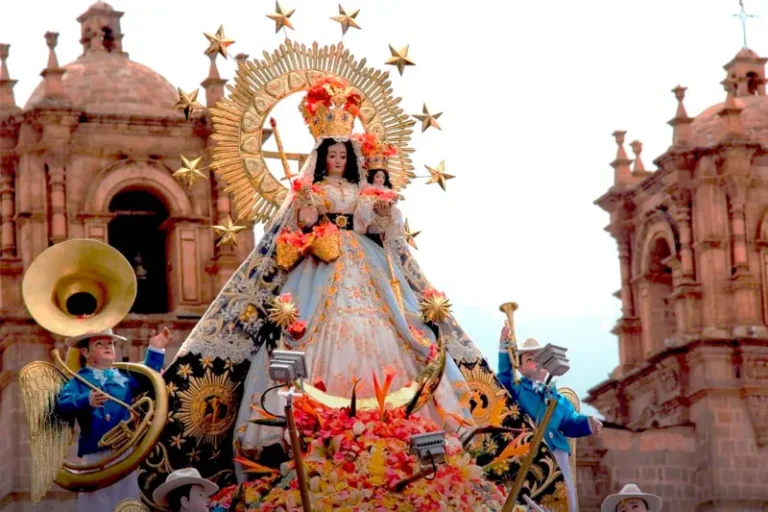
February in Cusco doesn’t feel like any other month. Brass music bounces off colonial stone walls before most people are even awake, color takes over streets that are normally just historic and quiet, and the whole character of the city shifts in ways that first-time visitors don’t see coming. The Virgin of Candelaria celebration drives all of it. Puno gets the international headlines for this time of year, but Cusco’s version runs on something different entirely, a neighborhood-level devotion that no ticketed stadium event can replicate.
Anyone serious about understanding Andean culture from the inside rather than from a distance should be here in early February. The tourist trail doesn’t come near what happens in these streets.
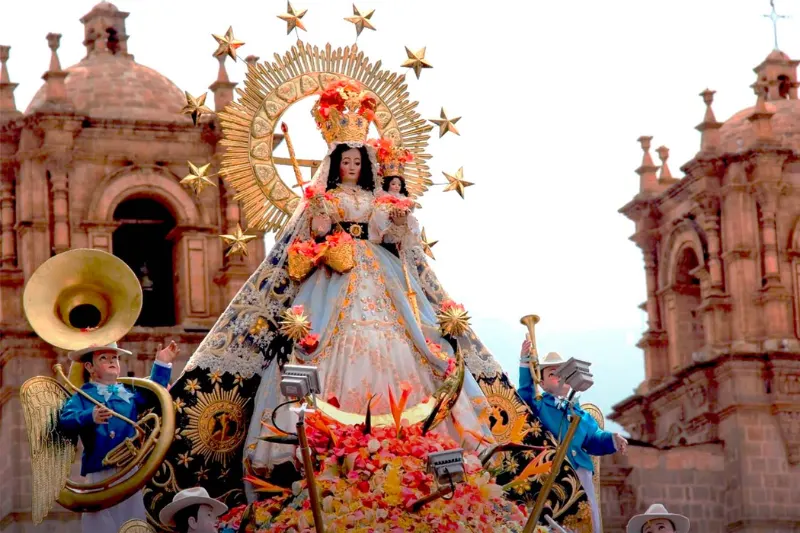
What is the Meaning of Mamacha Candelaria?
Mamacha comes from the local dialect, a blend of Spanish and Quechua that translates loosely to Mother. It’s informal and affectionate, not ceremonial, and that tone reflects something real about how people here relate to this figure. Not distant reverence but something closer and more familiar.
The Catholic calendar marks February 2nd as the purification of the blessed virgin and the presentation of Jesus at the temple. In the Andes that observance picked up additional weight over centuries of contact between Catholic doctrine and indigenous belief. What exists now is a genuine layering of Inca sun worship, reverence for Pachamama, and Catholic tradition that happened gradually and never fully separated. Early February also sits in the middle of the rainy season, so the procession carries agricultural meaning too. Asking for a good harvest is part of what’s happening, the same petition Andean communities have made to their various deities long before any Spanish priest set foot here.
The Heart of the Event: San Jeronimo District Religious Festival
San Jeronimo is a short drive from central Cusco and that’s where the festival actually happens. Not in the historic center, not in any venue built for outside audiences. A normally unremarkable neighborhood district turns into something barely recognizable during these days. Bands, processions, dancers, food stalls, crowds filling streets that aren’t designed for any of it.
The whole thing is community-funded and organized around the mayordomo system. A mayordomo takes on financial and logistical responsibility for a significant portion of the celebration. Bands, food, fireworks, decorations all fall under that umbrella. Families save for years to take the role on properly. Being selected as mayordomo carries real social weight in Andean communities and doing it well is treated as one of the highest honors available. This isn’t a government-organized event with sponsors. It comes entirely from within.
Differences Between Puno and Cusco Candelaria Celebrations
Puno’s Candelaria is the version that gets covered internationally. Stadium-scale, tens of thousands of competitive dancers, massive crowds from outside the region. The production value is high and the numbers are genuinely staggering.
Cusco operates on a completely different logic. No stadium, no tickets, no separation between the people performing and the people watching. Dancers who grew up in San Jeronimo move through the same streets they’ve walked their whole lives, a few feet from visitors who arrived that morning. The devotion running through it is personal in a way that large-scale competitive events can’t manufacture. That difference is exactly why Cusco’s version is worth seeking out on its own terms.
Sights, Sounds, and Tastes: Experiencing the Festival
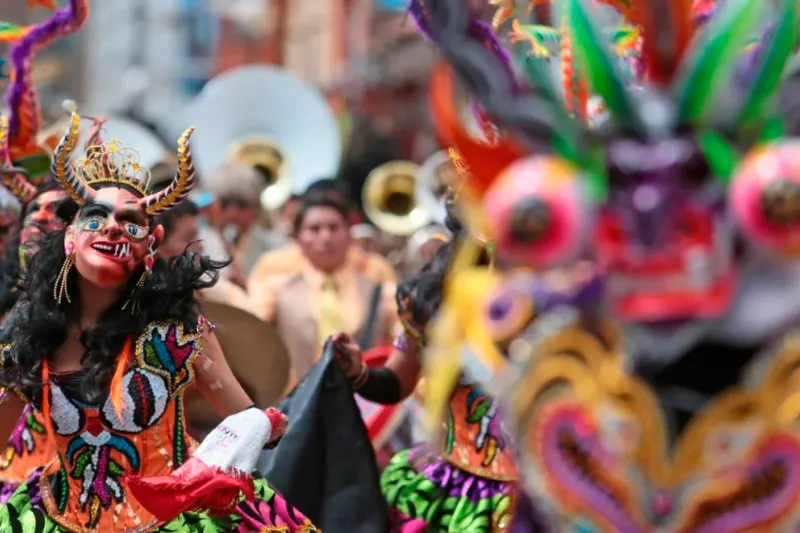
Brass bands announce everything before it comes into view. Traditional troupes perform dances that carry specific historical meaning, the Capac Qolla representing highland traders and the Majeño satirizing colonial-era liquor merchants in commentary that still reads sharp centuries after the fact.
The Visual Spectacle
Costumes in San Jeronimo are serious pieces of craft. Hand-embroidered, heavily layered, built with the kind of detail that only shows up properly in person. Dancers wear polleras and sequined jackets that catch Andean light differently depending on the hour, paired with masks depicting demons, angels, and mythological animals. Each outfit represents real financial investment and months of work. Photographs approximate what they look like but don’t land the same way as seeing them move through the streets.
A Feast for the Palate
Street food during the festival reaches back centuries in Andean cooking:
- Chiriuchu: Cold dish combining guinea pig, seaweed, fish roe, dried meat, and corn. Origins trace back to Incan times and the recipe hasn’t changed much.
- Lechón: Slow-roasted pork served with large tamales, the kind that take most of a day to prepare properly.
- Frutillada: Fermented corn beer brewed with local strawberries, served cold in large glass tumblers that vendors refill without much prompting.
A Practical Guide to Visiting Cusco in Early February
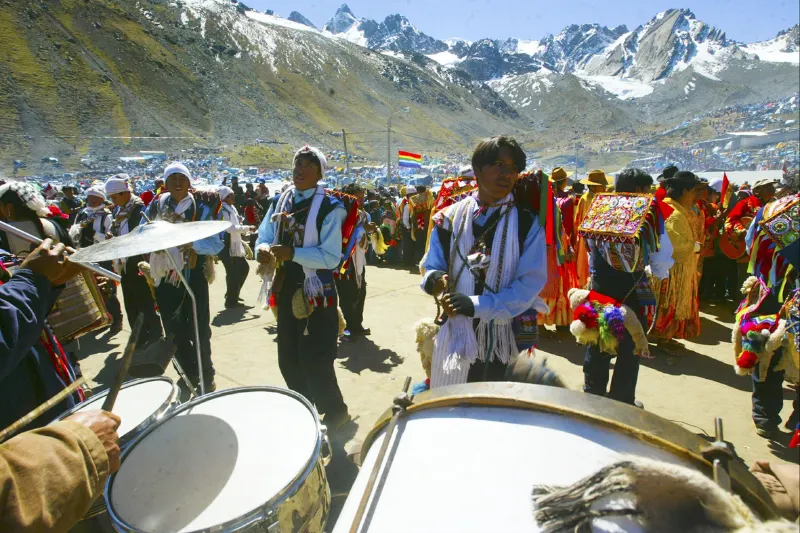
Best time to visit San Jeronimo for festivals: February 1st and 2nd carry the most intensity. The Octava, eight days after the main feast, brings another round of major parades and dancing worth staying for. Getting there by 9:00 AM catches morning masses and the start of street dancing before the density of the crowd makes movement difficult.
Where to watch Candelaria parade in Cusco: The central plaza of San Jeronimo is where to be. Church steps offer elevation and a clear sightline over the procession as dancers pass in front of the Virgin.
Navigating Cusco street closures during festivities: Avenida de la Cultura, the main road south from central Cusco, gets heavily rerouted during festival days. Local buses handle the route better than taxis stuck in diverted traffic. Walking the last stretch once close to the district is usually faster than waiting in a vehicle. Any schedule involving flights or Sacred Valley tours needs extra buffer time built in.
How to participate in Andean religious processions: Sidewalks rather than the street itself, clear of the dancers and the wooden litter carrying the Virgin, no flash photography pointed at devotees during the procession. Visitors wanting to engage more directly can pick up a small candle or floral offering from street vendors and leave it at the church steps.
Final Thoughts
The Virgin of Candelaria in Cusco isn’t built around outside visitors and it doesn’t need to be. San Jeronimo has been running this celebration long before tourism shaped anything about Cusco’s calendar, and the community investment behind it shows in every detail. Costumes, food, music, and the specific atmosphere of those streets during early February add up to something without a real equivalent anywhere else. Following the sound of the brass bands during this period leads somewhere worth going.