If you’re here for words in Quechua language, you’re in the right place. I’m going to share a practical word bank up front (the kind you can use in Cusco and the Sacred Valley). Then we’ll talk about what’s going on under the hood—the way the Quechua language builds meaning, why spellings vary, and why a few well-placed Quechua words can change the whole vibe of a conversation.
Quick outline (so it flows, not flops)
- A starter list of words in Quechua language (grouped by real-life use)
- Where you’ll hear Quechua in Peru (Cusco + Sacred Valley)
- How Quechua builds words (suffix stacking, but in plain English)
- Beautiful words in Quechua: the ones that carry culture
- Place names: the map is basically a glossary
- Spanish + Quechua: the everyday mix
- How to learn without turning it into a grind
First: a starter list of words in Quechua language you’ll actually use
These are common in the Cusco region. You’ll still hear variation by town, family, and teacher—so think useful and flexible, not “this is the only correct version.”
1) Hello, I’m not rushing you words (greetings + politeness)
- Allin p’unchaw: Good day / good morning
- Allin tuta: Good night
- Imaynalla kasanki?: How are you?
- Ari / Manan: Yes / No
- Añay or Sulpayki: Thank you
- Tupananchiskama: Until we meet again
Tupananchiskama is a favorite for a reason. It doesn’t slam the door. It leaves it gently open. And in a place where relationships matter, that small nuance matters.
2) Can you point me that way? words (getting around)
- Maypi … kashan?: Where is … ?
- Hayk’a valen?: How much is it? (you’ll hear Spanish influence here; it’s normal)
- Puriy: To walk / travel
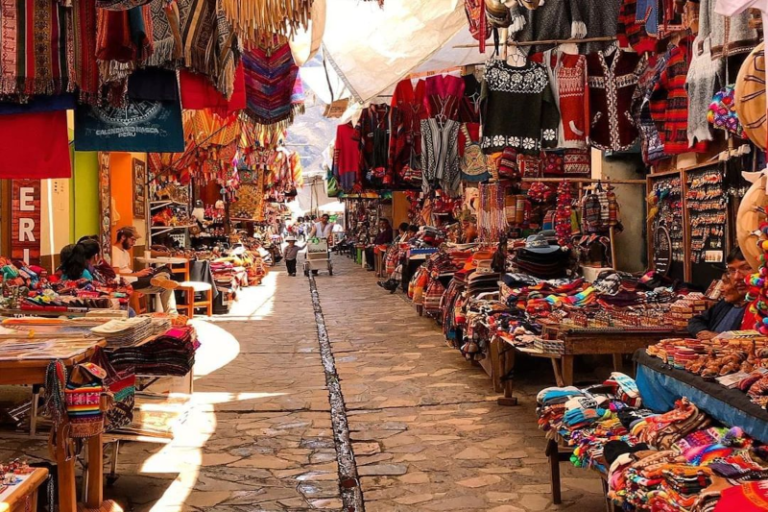
Quick digression: this is where visitors get tripped up. You’re tired, your phone has one bar, and you want the quickest line. Fair. But in many Sacred Valley markets, a greeting first is the whole user experience. Skip it and the interaction can feel chilly. Start warm and suddenly you’re not only buying something—you’re having a moment.
3) Food is the easiest icebreaker words
- Mikuy: To eat
- Papa: Potato
- Sara: Corn
- Yaku (and sometimes unu): Water
You’ll hear papa a lot—and then you’ll hear a bunch of potato variety names that never make it into tourist phrase lists. Peru is like that. It starts simple, then it gets wonderfully specific.
4) Everyday life words (the small but constant ones)
- Wasi: House / home
- Rimay: To speak
- Inti: Sun
- Killa: Moon
5) Words with weight (culture, land, community)
- Apu: Sacred mountain / mountain spirit
- Pachamama: Often translated as Mother Earth (but it’s bigger than that)
- Ayni: Reciprocity, mutual support
- Ayllu: Community + kin network
- Munay: To want; also love in a wider sense
- Kallpa: Strength / energy
- Tinkuy: A meaningful meeting / encounter
These are also some of the beautiful words in Quechua people talk about. Not because they’re fancy, but because they hold a whole social idea. One word, lots of meaning. Kind of like a strong project brief: short, but packed.
6) Bonus: small words that make you sound more natural
These aren’t always taught in travel lists, but you’ll hear them. They help your sentences feel less stiff.
- Kay: This
- Chay: That
- Ima: What
- May: Where
- Allin: Good / well
Try a simple combo: Kay papa hayk’a valen? How much is this potato? It’s not poetry, but it works.
Mini-scripts (because real life is messy)
If you like having a few ready-to-go lines—like templates you can reuse—these help. Think of them as reusable snippets, not magic spells.
- Allin p’unchaw. Imaynalla kasanki? Good day. How are you?
- Añay. Kay hayk’a valen? Thank you. How much is this?
- Maypi baño kashan? Where is the bathroom?
- Mana yachanichu. I don’t know (or: I don’t understand). (You’ll hear variants.)
- Rimayta yachachkani. I’m learning to speak. (Again: variants exist.)
And yes, you might say something a little off. That’s fine. Most people respond to effort, not perfection. The real KPI here is connection, not grammar.
Okay, where does Quechua show up in Peru?
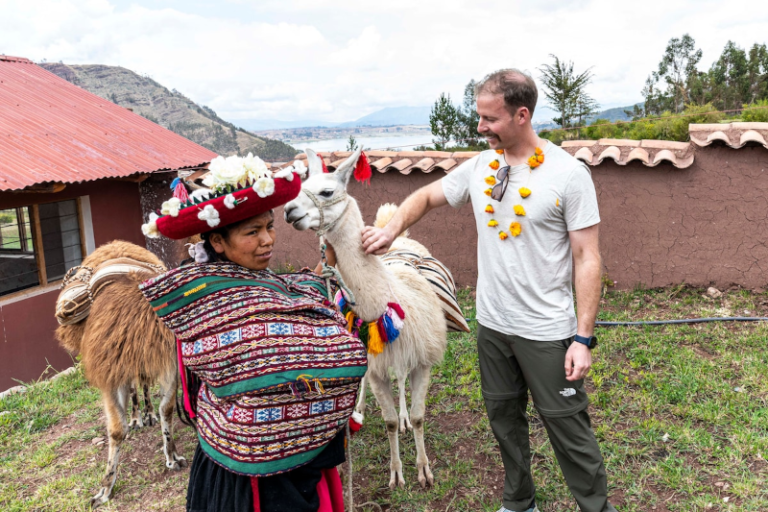
If you stay only in the tourist lanes of Cusco, you might think Quechua is rare. Step two streets away from the plaza, or spend time in Pisac, Urubamba, Ollantaytambo, or Chinchero, and it’s suddenly there—in family talk, market talk, work talk. It’s not always loud, but it’s steady.
And it’s not frozen in time. You might hear Quechua at home, Spanish at school, and both on the street. You might hear a Quechua sentence with a Spanish word dropped in. That isn’t a failure. It’s bilingual life doing what bilingual life does.
If you’re looking for learning spaces, Cusco has tutors, university programs, and community-centered groups. Some visitors also connect with local cultural education initiatives referred to as CETC. Programs change, but the vibe is consistent: language is taught with culture, not separated from it.
Words are built, not fetched: how Quechua forms meaning
Here’s the thing: Quechua likes suffixes. A lot. Instead of throwing extra helper words into a sentence, it often adds small endings onto a root word. If you’re used to English, that feels different at first. Then it starts to feel tidy.
Take wasi (house):
- wasi = house
- wasi-yki = your house
- wasi-yki-kuna = your houses
- wasi-yki-kuna-pi = in your houses
That stacking can look long on a screen, but it’s smooth in speech. And it helps with recall. You don’t need 30 separate memorized lines; you need a few roots, then a feel for the add-ons.
Also—and this saves a lot of stress—you’ll see different spellings in different materials. Don’t panic. You’re not failing. You’re seeing a real language with real history, taught by real institutions.
Numbers and time (because you can’t bargain with vibes)
Want another set of words in Quechua language that pays off fast? Numbers. You’ll use them in markets, transport, and planning. Even if you only learn 1–10, you’re already more capable.
- 1: huk
- 2: iskay
- 3: kimsa
- 4: tawa
- 5: pichqa
- 6: suqta
- 7: qanchis
- 8: pusaq
- 9: isqun
- 10: chunka
You’ll hear different pronunciations, and spellings can shift. That’s normal. The point is recognition. When someone says a price quickly, catching even one number helps you stay in the conversation.
Time words vary by region and speaker, but a few common ones show up a lot:
- p’unchaw: day
- tuta: night
- kunan: now
A tiny pronunciation pep talk (Cusco ears version)
You don’t need perfect pronunciation. But effort goes a long way. It’s like showing up to a meeting prepared: people can feel the respect, even if you’re not flawless.
- Quechua is often described as having three core vowel sounds (a, i, u). The e and o you hear can be context-driven.
- The r is usually a light tap, closer to Spanish than English.
- In Southern Quechua, some consonants have different force versions. If you hear a difference, you’re not imagining it.
You know what works better than any chart? A human. Ask someone to say the word. Repeat it. Smile. Try again. That loop is the whole method.
Beautiful words in Quechua (and why they hit different)
Some words carry more than dictionary meaning. They carry a way of organizing life. That sounds lofty, but you can feel it in normal conversation.
Take ayni. People translate it as reciprocity, and that’s accurate, but it’s also highly practical. It functions as a social safety net, driving how work gets done and how a community stays a community. If you’ve ever helped a friend move apartments and they later showed up when you needed them, you already understand the idea. Quechua just has a clean label for it.
Or apu. You can translate it as a sacred mountain or mountain spirit, but the lived meaning is bigger. In the Cusco region, mountains aren’t only scenery. They can be spoken about like powerful presences. That shifts how place feels. It makes the landscape feel less like a backdrop and more like a participant.
And pachamama might be the most famous. People often say Mother Earth and move on. But in practice, it’s tied to gratitude, care, timing, and responsibility. It’s not a slogan. It’s relationship language.
So yes, these are beautiful words in Quechua. But beauty here isn’t about being cute or exotic. It’s about being useful and meaningful at the same time. That’s rare.
Place names: the map is a vocabulary list
Even if you never take a class, you’re already seeing words in Quechua language on signs and maps. Around Cusco, a few famous examples get shared a lot:
- Cusco / Qosqo: often explained as navel or center
- Machu Picchu: old peak
- Huayna Picchu: young peak
Then you’ve got names people love to interpret—Pisac, Ollantaytambo, Chinchero. You’ll hear different explanations depending on who’s telling the story. That can feel messy, but it’s also honest. Language history isn’t always a clean paper trail. It’s more like family lore: repeated, adjusted, kept alive.
And here’s a fun side effect: once you start paying attention, you stop treating place names like random sounds. They start to feel like clues. You start asking, “Wait, what does that mean?” And suddenly you’re talking with people, not only consuming a destination.
Spanish + Quechua: the everyday mix
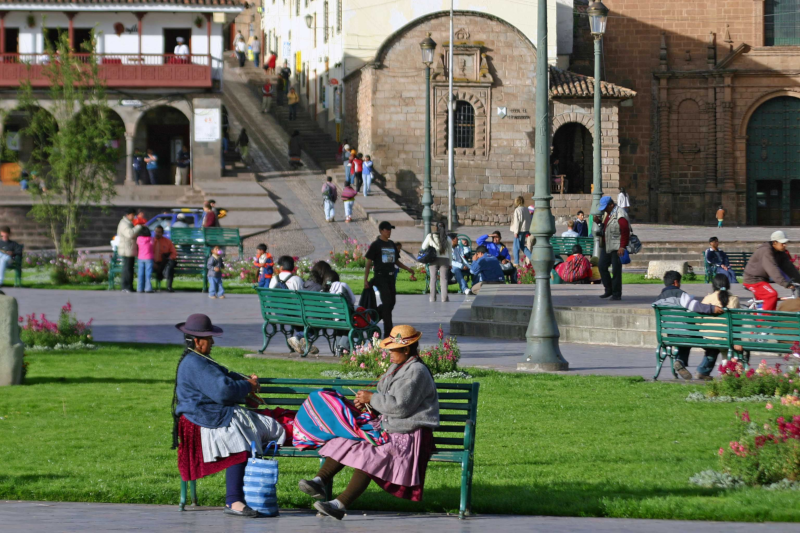
You’ll hear Quechua and Spanish braided together all the time. Some people treat that like a problem. But for many bilingual speakers, it’s simply life—two tools, one conversation.
A few well-known Spanish loans that show up in Quechua forms:
- caballo kawallu
- vaca waka
- dios diyus
- mesa misa
And yes, Quechua words traveled too. English uses a few without thinking about it:
- jerky: from ch’arki, dried meat
- quinoa: from kinwa
- poncho: from punchu
- guano: from wanu
So, yeah. If you’ve ever typed quinoa into a grocery app, you’ve already used a Quechua-origin word. Small world.
Seasonal reality check (because Peru changes by the month)
If you’re planning travel, it helps to know the rhythm of the year around Cusco. The dry season (roughly May to October) is when a lot of visitors arrive, and June is famous for Inti Raymi in Cusco. The rainy season (roughly November to March) changes transport, trails, and market life.
The point isn’t to memorize climate trivia. The point is simple: daily language follows daily life. When farming, weather, and festivals matter, the words for land and timing show up more. So when you learn words like inti (sun) and yaku (water), you’re not memorizing random nouns. You’re learning what people talk about all the time.
Last bit: how to learn (without turning it into a chore)
If you want a simple plan that works, keep it human. Also, keep it small. Consistency beats hero mode.
- Learn greetings first, and use them daily in Cusco and the Sacred Valley.
- Pick a few roots (wasi is great) and watch how suffixes get added.
- Practice with a tutor or a community-based program in Cusco (including local cultural education groups such as CETC, where available).
- Use tech carefully: Google Translate is helpful for Spanish, but it’s uneven for Quechua. Human feedback wins.
- Build a tiny weekly routine: 10 minutes a day, then test it at a market on the weekend.
And give yourself permission to be new at it. People can hear effort. They can also hear ego. One of those gets you smiles.
Conclusion: words that change how you travel
Learning words in Quechua language isn’t only a language task. It’s a way of showing respect in Peru—especially around Cusco and the Sacred Valley, where land, community, and memory stay close together.
Start small. Say the words out loud. Listen for them in markets and on buses. And when you catch yourself understanding a phrase without trying—that little spark—that’s the good stuff.