
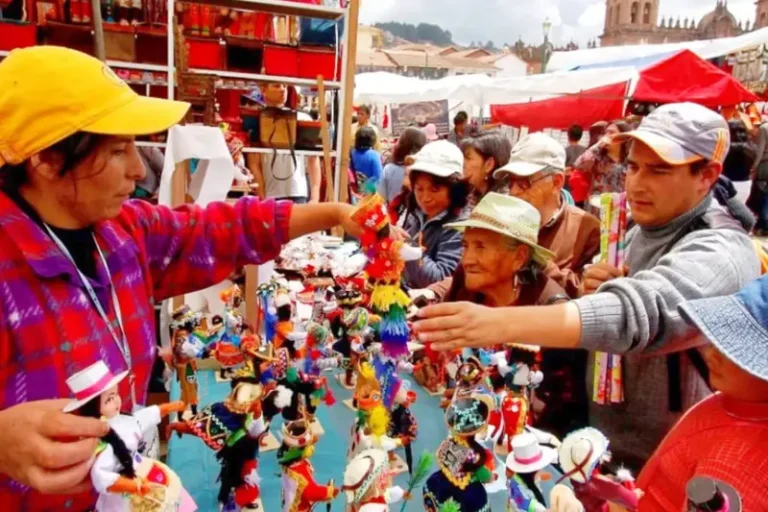
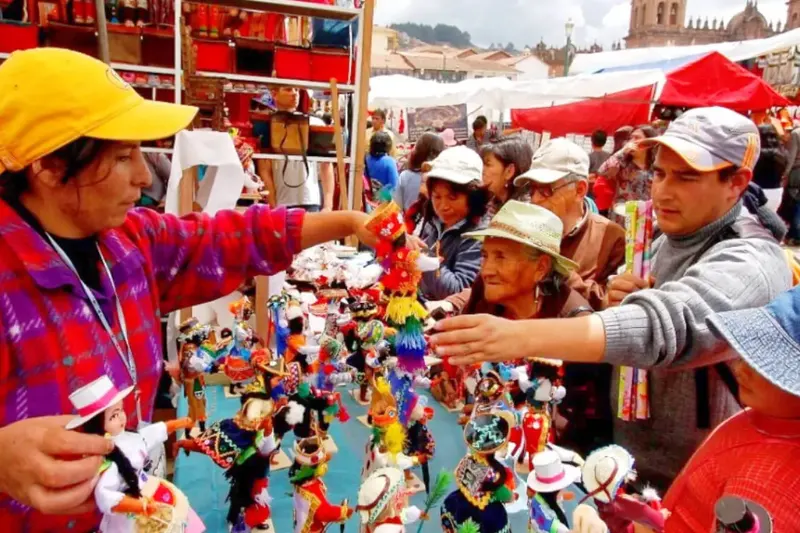
Christmas Eve in Cusco’s Plaza de Armas doesn’t look like Christmas anywhere else. Thin cold air at 11,000 feet, dried moss smell mixing with incense, thousands of people moving through stalls that appeared overnight and will disappear by morning. Santurantikuy is a Quechua word meaning the Sale of Saints, and what happens here on December 24th is genuinely one day only.
No extended holiday shopping season, no commercial buildup. Rural artisans travel across mountain passes specifically for this single gathering and the plaza becomes something between a market and a pilgrimage site for the families who’ve been coming their whole lives.
Decoding the ‘Sale of Saints’: How Andean Faith Reimagined Spanish Tradition
Spanish conquistadors arrived in the 16th century expecting Catholicism to replace Inca belief completely. That’s not what happened. Indigenous makers responded by absorbing the new religious framework and reshaping it from the inside, weaving their own traditions into the forms the Spanish introduced rather than abandoning what came before.
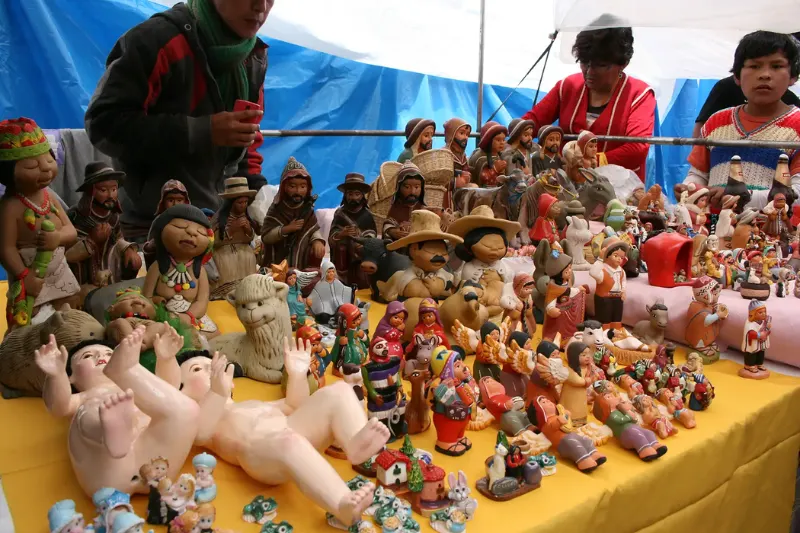
The pieces sold in the plaza show exactly how that worked. Andean reverence for Pachamama didn’t disappear. It changed its visible shape. European nativity scenes got rebuilt in a distinctly local image:
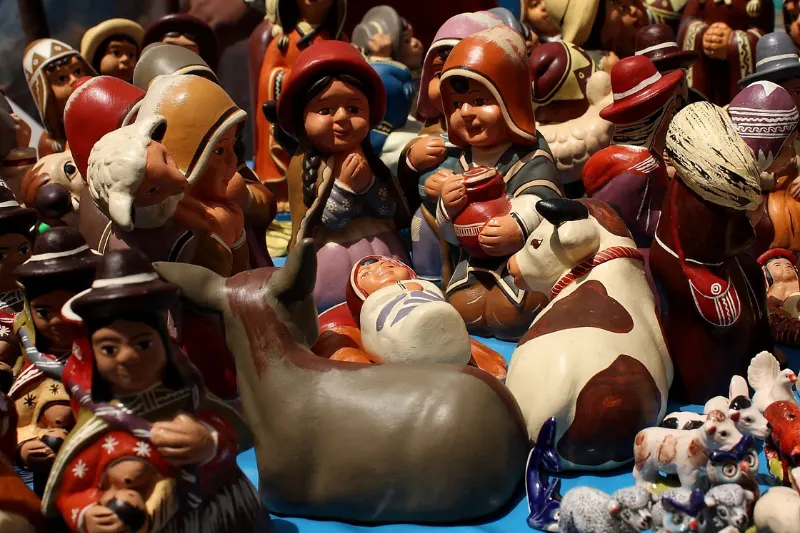
- Nativity figures wearing knitted chullos, the ear-flap hats worn against Andean cold, rather than Mediterranean robes.
- Wise Men offering native potatoes and guiding llamas instead of arriving on camels with gold.
- Ceramic virgins painted with agricultural harvest symbols, their robes subtly shaped like sacred mountain peaks.
That quiet reshaping of foreign theology into something locally recognizable is how Andean culture survived the colonial period. The market is where that survival is most visibly on display.
Meet the ‘Niño Manuelito’: Why This Thorn-Crowned Child Is Cusco’s Most Beloved Icon
The figure at the center of Santurantikuy isn’t a standard nativity infant. The Niño Manuelito, an Andean localization of Emmanuel, is depicted as a weeping boy pulling a thorn from his bare foot. That specific image reflects something about shared suffering and the historical realities of Andean life that a serene European nativity baby doesn’t carry.
Spotting a genuine piece requires knowing what to look for. Authentic Niño Manuelito figurines have distinctly Andean facial features with cold-reddened cheeks rather than pale European characteristics. Their mouths sit slightly open, often revealing tiny teeth made from glass or mirror fragments. The joints are articulated specifically so families can dress the figures in velvet tunics or knitted ponchos that fit their proportions. These details are what separate a real piece from a market reproduction, and they’re also what makes an authentic Manuelito something families pass between generations rather than replace.
Behind the Clay: How ‘Imagineros’ Turn Sacred Valley Earth Into Living History
The artisans who make these figures are called imagineros, image-makers, and their material choices are deliberate rejections of commercial supply chains. Everything comes from the landscape directly:
- Rich Sacred Valley clay for fine detailing
- Spongy maguey wood harvested from agave plants for structural bases
- Natural gypsum paste applied as a smooth painting surface
- Delicate squirrel hair brushes for details as small as individual eyelashes
Larger statues use what’s called the maguey technique, carving the lightweight agave stalk and coating it in gypsum to build figures durable enough to carry across mountain passes without breaking. The knowledge behind these methods doesn’t move through formal training programs. It passes from grandparent to grandchild in family workshops, which is the only reason any of it still exists.
The Mendívil family represents the best-known example of that legacy. Their signature style, figures with elongated necks inspired by Andean llamas, became a globally recognized hallmark of Peruvian ceramics. Pieces from that lineage are in the market if the search is patient enough.
Navigating the Plaza: What to Buy and Eat for an Authentic Andean Christmas
Temperature drops fast in the plaza after dark and the stalls cover enough ground that moving through them without a sense of what matters results in missing things worth finding. Four specific things worth prioritizing:
- Toritos de Pucará: Fiercely painted clay bulls traditionally placed on rooftops for household protection. The symbolism behind them runs deeper than decorative ceramic.
- High-altitude moss: Harvested from Andean peaks and used as the earthy base for traditional nativities. The smell of it is specific to this market in a way that’s hard to describe until it’s experienced.
- Ponche: Hot milk and cinnamon served in cups from street vendors. The definitive warm drink for navigating the cold plaza at night and the thing most people end up drinking more than once.
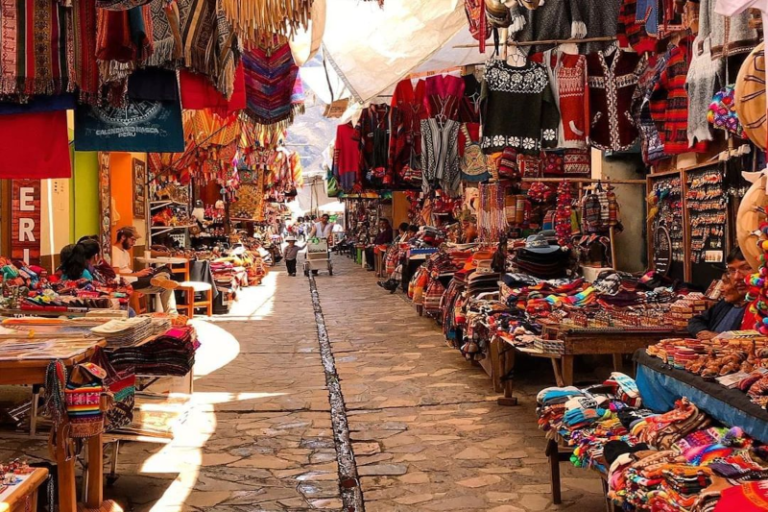
- Handwoven textiles: Vibrant mantas that wrap fragile clay purchases safely for the trip home and serve as genuine quality pieces independent of that function.
Preserving the Spark: Why Santurantikuy Remains More Than Just a Market
Santurantikuy works as a market on the surface and as something considerably more underneath. Centuries of Andean cultural survival are visible in the specific details of every clay figure on every table. The elongated necks, the articulated joints, the tiny glass teeth, the llama guiding the Wise Men. None of those details are decorative choices. They’re the record of a culture that didn’t disappear under colonial pressure but adapted and kept moving forward in the only forms available.
Buying directly from master artisans rather than from resellers matters here in a practical way. The money reaches the people who hold the knowledge. The knowledge is what keeps the tradition alive rather than reducing it to a seasonal product line. Walking through the plaza on December 24th with that context changes what the stalls look like and what the purchases mean.