
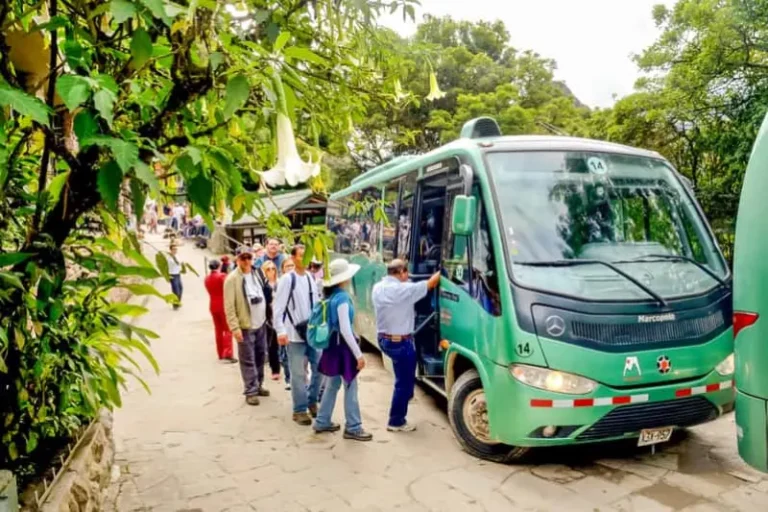

Trains and entrance tickets get all the attention. The final stretch gets forgotten. The citadel sits on a ridge above Aguas Calientes and getting there requires a separate decision that blindsides visitors who figure it out too late. The buses in Machu Picchu carry almost everyone who shows up for that last leg.
Getting this handled before arrival removes one of the more consistent sources of morning chaos.
The Journey: Hiram Bingham Road Route Details
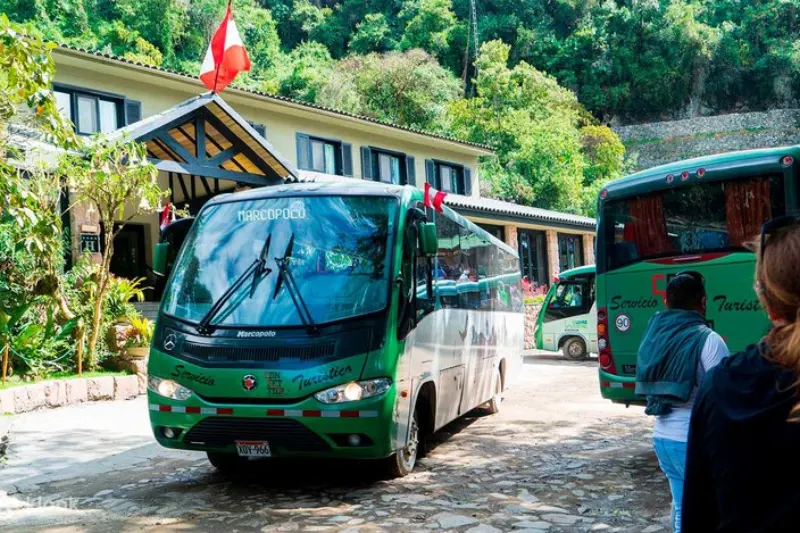
Fourteen switchbacks cut into steep mountainside covering roughly 8 kilometers over about 25 to 30 minutes. Around 400 meters of elevation gain through dense cloud forest happens during that ride. The Hiram Bingham road route in practical terms is that simple.
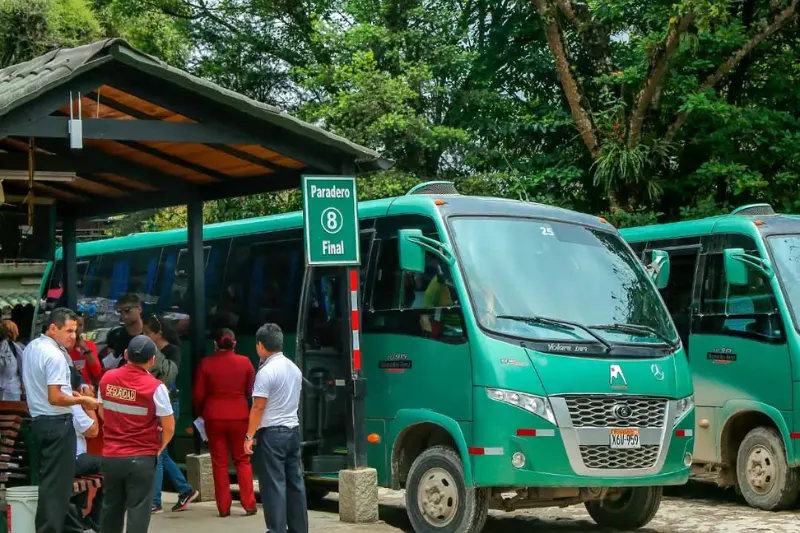
The official Machu Picchu shuttle fleet is built specifically for these tight turns and steep inclines. Local drivers navigate it with precision accumulated from doing it multiple times daily over years. Drop-offs look dramatic from the window and the safety record holds up well.
How to Get Your Bus Tickets
The bus ticket is separate from the entrance pass and the train ticket. Most people miss this until standing in Aguas Calientes figuring it out on the spot. Knowing how to buy Machu Picchu bus tickets online before arriving saves real time. The official Consettur website is the sole operator and only legitimate source.
When weighing buying bus tickets in advance versus on-site, advance purchase wins during peak dry season from May through October. Buying ahead means queuing once to board rather than queuing to buy and then queuing again, which unnecessarily eats into the morning.
The Machu Picchu bus ticket office location sits on Avenida Hermanos Ayar, about five minutes on foot from the train station. Consettur bus tickets are available there in person for anyone preferring to handle it on arrival.
Pricing and ticket types:
- The cost of shuttle from Aguas Calientes to ruins runs approximately $24 USD round-trip for adult foreign visitors. Children and Peruvian citizens receive discounted rates.
- The difference between uphill and downhill tickets is purely directional at roughly $12 USD each way. Some travelers ride up and hike down to save money while keeping energy for the ruins.
Schedule, Wait Times, and the Boarding Process
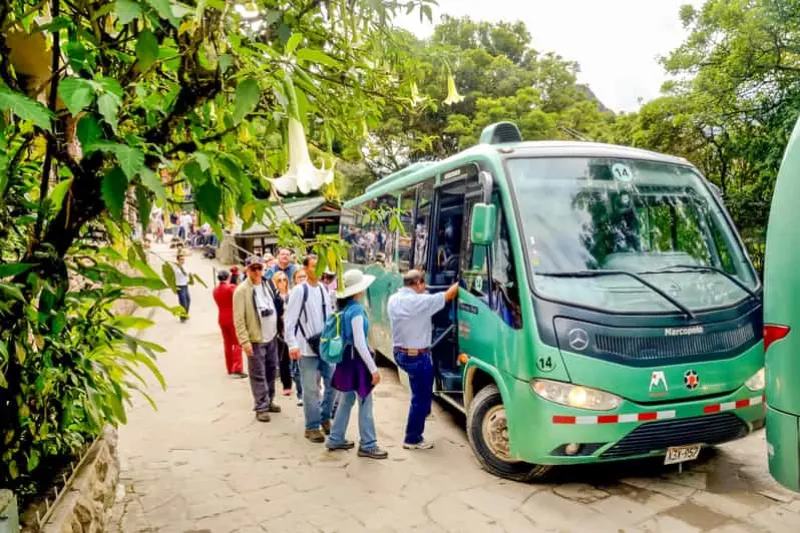
Buses start at roughly 5:30 AM and run continuously, departing every 10 to 15 minutes or when a vehicle fills. The Machu Picchu shuttle schedule aligns with park entry time slots and early morning congestion builds fast.
Peak hour wait times for shuttles fall between 5:30 AM and 8:00 AM when everyone with early entry tickets hits the same queue simultaneously. Waiting 45 minutes to over an hour during that window is normal rather than exceptional. Anyone with an early morning entry ticket needs to factor that wait into the plan rather than discover it as a surprise.
The bus boarding process for visitors is strict but efficient. Three things need to be ready before stepping on:
- Printed or digital bus ticket.
- Official Machu Picchu entrance ticket.
- Original physical passport since digital copies on a phone are generally not accepted.
The final shuttle back down typically leaves at 5:30 PM. Missing it means a dark walk down the mountain that safety protocols strongly discourage.
Walking vs. Taking the Bus: Which is Right for You?
When comparing walking versus taking the bus to Machu Picchu, the honest answer depends on fitness level, weather, and what else is planned inside the park. Most travel content doesn’t describe the walk accurately.
Over 1,600 steep uneven stone steps cut straight up through the switchbacks, taking most people between 1.5 and 2 hours at altitude in dense cloud forest humidity. The physical difficulty of hiking the stairs catches people off guard consistently. Many hikers reach the entrance gates already exhausted before seeing a single ruin inside.
Is the shuttle bus worth the price? For most visitors yes, without much deliberation. Taking the bus preserves energy for the ruins, for Huayna Picchu, for Machu Picchu Mountain, for anything inside the park that actually earns the physical effort. The bus service also provides vital transportation options for limited mobility travelers, older visitors, and families with young children who deserve access without the climb being the barrier.
Final Takeaway
Tickets bought early, documentation ready, morning queue factored into the schedule. Those three things handled in advance mean the day starts with the ruins rather than with logistics that should have been sorted weeks earlier.
The buses in Machu Picchu handle the steep winding climb so visitors don’t have to. The view waiting at the top of that switchback road earns the 25-minute ride completely.