
Ten minutes after landing, tying shoelaces feels like sprinting uphill. That’s not exaggeration. That’s what 11,000 feet of elevation does to a body that was at sea level this morning, and it catches people off guard every single time. Flying straight into sacred valley peru without any buffer plan is the move that quietly ruins the opening days of trips that took months to organize.
What saves those trips is sitting right next door to Cusco, largely ignored. The sacred valley altitude drops roughly 1,500 feet below the capital, and that number is bigger than it sounds when the body is trying to figure out how to breathe properly. Doctors who specialize in altitude travel have been sending people down into the valley for years. The ones who go come back talking about how different the whole experience felt.
This guide is the practical version of that advice. What the altitude of sacred valley peru actually does inside the body, how to use the valley’s own geography as a recovery tool, and what to eat, drink, avoid, and carry along the way.

Why Altitude Feels Like Breathing Through a Straw
Most people assume the air up here has less oxygen in it. It doesn’t. The atmosphere holds around 21 percent oxygen whether someone’s standing at the beach or halfway up the Andes. What shifts is barometric pressure, and that pressure change spreads the oxygen molecules further apart so each breath physically captures fewer of them than the lungs are built to expect.
The body’s response kicks in fast. Within 48 hours, red blood cell production ramps up to compensate, building a bigger fleet of oxygen carriers to handle the thinner supply. That process works, but it takes time, and in the gap between arriving and adapting, walking up a hotel staircase can genuinely leave someone breathless.
Sacred valley elevation is lower than Cusco by enough to make those first 48 hours measurably easier. The biology is the same either way, the body still adapts, but the Sacred Valley gives it a gentler environment to do it in.
The Sacred Valley vs. Cusco: Choosing the Right Starting Line
Cusco at 3,399 meters is stunning and brutal in equal measure on day one. The Sacred Valley towns sit around 1,500 feet below that, which sounds modest until 2:00 AM when altitude-disrupted sleep kicks in. High elevation interferes with breathing during sleep, waking the body repeatedly in ways that leave people more exhausted in the morning than when they went to bed.
Heading straight down into the valley after landing isn’t just a wellness tip. It’s the actual mechanism that makes the rest of the trip work properly. The sacred valley altitude hands the body a gentler starting line while keeping everything worth seeing within easy reach. The main town options for those opening nights break down like this:
- Ollantaytambo (2,792m / 9,160ft): Lowest in the valley, direct train to Machu Picchu, best pure recovery base.
- Urubamba (2,871m / 9,420ft): Central and well-serviced, still dramatically easier than the capital.
- Pisac (2,972m / 9,751ft): Slightly higher but a massive step down from Cusco’s elevation.
Getting accommodation sorted in one of these towns before the flight lands is one of the best practical decisions in the whole itinerary. A Sacred Valley of the Incas Tour covers most of these towns in a single organized loop, which makes it a smart first move for anyone who wants to absorb the valley without having to figure out logistics from scratch on arrival day.

The 3-Day Gradual Ascent Blueprint
The airport sits high. Leaving it quickly matters. A pre-arranged driver going straight down into the valley bypasses the worst of Cusco’s elevation during the hours when the body is most vulnerable and least aware of it. Feeling normal on arrival is the deceptive part. The headache and fatigue tend to appear four to six hours later, not right away.
Those first 48 hours should look genuinely uneventful. Twice the usual water intake, slow walks on flat ground, nothing that qualifies as exercise. That quiet schedule buys the blood enough time to build new oxygen capacity without simultaneously fighting off physical exertion. It feels like wasted time until day three, when the difference becomes obvious.
Day three is the turning point. Knowing how long to acclimate before visiting Machu Picchu is what separates people who absorb the citadel from people who sit on a wall feeling sick. For those with limited time, a Tour to Machu Picchu Full Day from the valley base is the most efficient way to hit the citadel once the body has had those critical 72 hours to adjust. Three careful days in sacred valley peru is a trade worth making every time.
Elevation Cheat Sheet: From Pisac to Machu Picchu
Here’s the thing almost nobody expects. Machu Picchu sits lower than most of the towns on the route to reach it. The Urubamba River pulls the valley steadily toward the Amazon edge rather than climbing further into the peaks, so following the standard itinerary actually involves a gradual descent rather than an endless climb upward.
The numbers lay it out clearly:
- Pisac Ruins: 2,972 meters (9,751 feet)
- Ollantaytambo: 2,792 meters (9,160 feet)
- Machu Picchu: 2,430 meters (7,972 feet)
Even so, visiting sacred valley attractions like Pisac and Ollantaytambo demands genuine respect before the body has finished adapting. Short steep staircases at both sites spike oxygen demand in ways that a longer gradual climb wouldn’t. Going hard at these spots too early is a reliable way to arrive at Machu Picchu already burned out. A Tour to the sacred valley connection Machu Picchu 2 Days strings these sites together in the right sequence, building elevation gradually rather than jumping straight to the top.

Recognizing Soroche Before It Ruins Your Hike
Breathlessness on steep stone terraces is normal and expected. Soroche is something else. That’s the Andean word for altitude sickness, and when it arrives properly, the symptoms stop feeling like tiredness and start feeling like the body actively refusing to cooperate with the day’s plans.
Three specific things to watch for: a headache that doesn’t move, nausea arriving without warning, and lying down completely exhausted but being unable to fall asleep. The Throb Test is worth knowing. Bend down, tie a shoe, stand back up. If that sequence produces a sudden intense pounding in the temples, that’s early oxygen deprivation signaling rather than normal fatigue.
The people of Cusco have spent entire lifetimes at these elevations. They move slowly, breathe deliberately, and treat those warning signals as information rather than inconvenience. Doing the same, stopping, resting, descending if symptoms don’t ease, is the only correct response every time.
Mastering the Art of the Coca Leaf
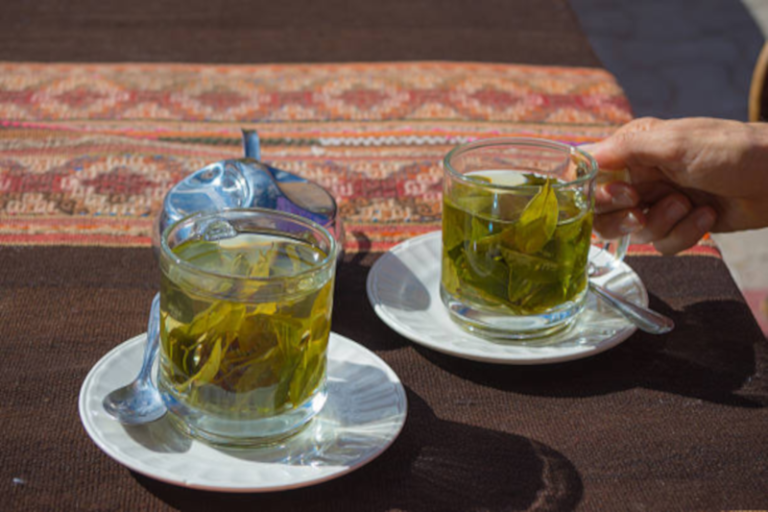
Every hotel lobby in the Sacred Valley keeps dried green leaves near the entrance. That basket isn’t décor. Coca leaves have been managing sacred valley altitude longer than any pharmaceutical has existed, and the chemistry behind them is legitimate. Their natural alkaloids open airways and nudge circulation upward slightly, helping the limited oxygen supply find its way to the brain more reliably.
Three ways to use them depending on personal preference:
- Tea (Mate): A few leaves steeped in hot water, exactly how the valley starts every morning.
- Chewing (Acullico): A small wad in the cheek, absorbed slowly without swallowing, the traditional farming method.
- Candies: Pocket-friendly option for mild relief while moving through ruins during the day.
Coca tea earns its reputation at altitude and works best taken in the morning or midday. After dinner it tends to backfire, compounding the sleep disruption that the elevation is already causing at night.

Eat Light and Drink Heavy: Fueling for High Elevations
The stomach gets deprioritized at altitude because the heart has more urgent demands on the available energy. Digestion drops by 20 to 30 percent around 9,000 feet, which means a heavy meal isn’t just uncomfortable, it actively slows recovery. Andean quinoa soup, simple carbohydrates, and light proteins are what move through the system cleanly at sacred valley elevation.
Dry mountain air pulls moisture from the lungs constantly. Doubling daily water intake at this elevation isn’t overcaution, it’s basic maintenance for blood that thickens in thin air and needs hydration to keep carrying oxygen efficiently. Most altitude headaches are partly dehydration headaches in disguise.
Alcohol suppresses the respiratory drive, meaning the body breathes more shallowly after a drink at exactly the elevation where it needs to breathe more deeply. No alcohol for the first 48 hours is one of the simplest high-impact rules available to anyone arriving in the valley.
When to Call the Pharmacist: Using Altitude Medication Safely
Water and rest don’t always cover it. Prescription Acetazolamide works by pushing the body to breathe deeper and faster through a chemical mechanism that overrides the normal breathing rate regulation. Tingling in the fingers and toes while taking it is standard and signals the medication functioning as intended rather than a side effect to worry about.
Sorojchi Pills are what Cusco pharmacies hand to visitors who show up already struggling. Aspirin, caffeine, and anti-nausea compounds combined work well for the hangover-like head pressure that hits in the first hours. They don’t touch the underlying oxygen deficit but take enough edge off to make the adjustment window manageable.
A wet cough, confusion, or extreme breathlessness while lying still are different. Those symptoms sit above the pharmacy level and need professional medical attention. Standard sacred valley altitude adjustment doesn’t produce them, and anything that does requires more than a pill from a shelf.

Hiking the Andes Without Losing Your Breath
The bottom of ancient stone terraces triggers an instinct to climb them at a normal pace. At 9,000 feet that instinct burns through available oxygen faster than the body can catch up, and the wall hits suddenly rather than gradually. Most people don’t feel it building until they’re already in trouble.
The Sync-Step technique handles this directly. One deep deliberate breath per step upward matches supply to demand without building the deficit that causes people to stop and gasp midway up a flight of stairs. It feels unnatural for about twenty minutes and then becomes the only approach that makes sense up there. Is sacred valley good for altitude sickness prevention through movement? Absolutely, and this rhythm is a core part of why.
Day-packs belong at or under ten percent of body weight when moving through sacred valley attractions. Water and a jacket are the actual requirements. Everything heavier adds to a cardiac load that altitude is already inflating significantly.
Your Sacred Valley Success Plan: From Landing to Exploring
The Andes built a staircase and most visitors ignore it. Dropping into the sacred valley altitude on arrival day instead of absorbing Cusco’s full elevation straight off the plane resets what the rest of the trip feels like. Following these 7 tips to avoid altitude sickness turns that geography into a practical plan:
- Hydrate heavily: Double water intake from the moment the plane lands, not from when the headache starts.
- Eat light: Simple carbohydrates only, the stomach is working at reduced capacity up here.
- No-stress arrival: No hiking on day one, the valley rewards patience more than ambition.
- Sleep low: First nights in the Sacred Valley rather than Cusco, consistently.
- Use coca tea: Morning mate de coca is the oldest reliable tool in the elevation toolkit.
- Move slowly: Pace matches breathing rhythm, not habit or the person ahead on the trail.
- Know the warning signs: Persistent headache, nausea, or insomnia means stopping and descending immediately.
Peru’s dry season runs May through October, and that window is when the gradual ascent through sacred valley peru clicks most reliably into place. How much time someone has shapes which format works best for them. A Cusco 3 days Tour covers the essential highlights for short stays, while a Cusco 4 days Tour adds enough breathing room to include the valley properly. Those who want more depth tend to go with a Cusco 5 days Tour, and travelers who want to experience everything at a genuinely relaxed pace often find that a Cusco 9 days Tour is the format where the altitude adjustment actually feels effortless rather than rushed. Respect what the mountains ask for in terms of time and pace, and the trip becomes exactly what it was supposed to be.

FAQs
What is the altitude of sacred valley peru?
Most towns sit between 9,000 and 10,000 feet, roughly 2,700 to 3,000 meters. Ollantaytambo sits at 2,792m, Urubamba at 2,871m, and Pisac at 2,972m.
Is sacred valley good for altitude sickness?
It works as a smarter first stop than Cusco because sacred valley elevation is lower, symptoms tend to be milder, and sleep quality is better during those first critical nights of acclimatization.
Is the Sacred Valley higher or lower than Cusco?
Lower. Cusco sits at 3,399m and the Sacred Valley runs roughly 1,500 feet below depending on the specific town chosen as a base.
Do you still need to acclimate in Sacred Valley Peru?
Yes. Sacred valley altitude is still well above sea level. The first 24 to 48 hours should involve extra hydration, light meals, and genuinely minimal exertion regardless of how normal arrival feels.
Which sacred valley attractions feel hardest at altitude?
Pisac Ruins and Ollantaytambo hit hardest because their steep short staircase climbs spike oxygen demand faster than longer gradual ascents do.