
A quick sketch before we start (so we don’t wander off too far):
- First, what Qoricancha is and why it mattered so much to the Inca.
- Then, the gold stories (including the famous “garden”).
- Next, how the Spanish built the Santo Domingo convent right on top—and what that looks like up close.
- After that, the stonework and the earthquake logic behind it.
- Finally, sky-watching, Inti Raymi, and a few practical visiting tips.
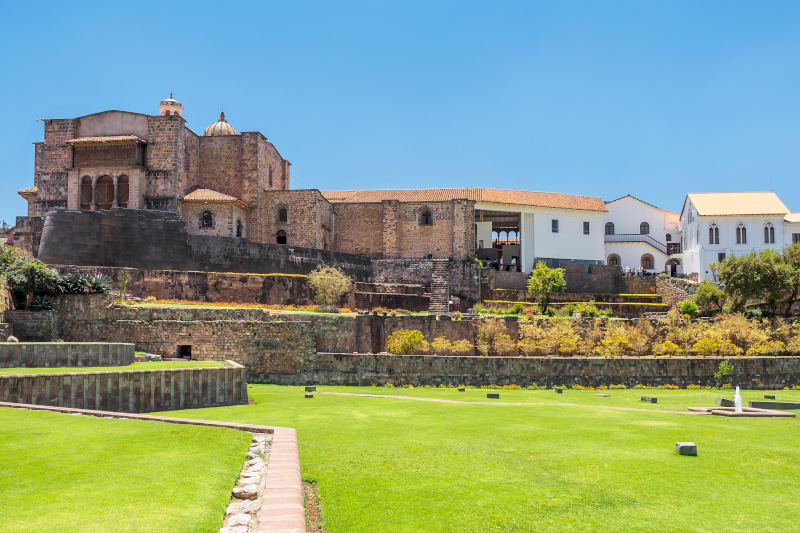
You’re walking through Cusco, you turn a corner, and suddenly you’re staring at a wall that looks… too perfect. Like it was cut with a modern saw, not shaped by hand centuries ago. That’s the hook of Cusco Qoricancha—a place where the Inca and the Spanish didn’t just meet; they got stacked, literally, one on top of the other.
Qoricancha (often spelled Coricancha) is sometimes called the “Golden Enclosure.” That name isn’t marketing. This was the Inca Temple of the Sun—the center of religious life in the empire. And yes, there are stories of gold everywhere, so much gold it makes your brain do that little “wait, seriously?” stutter.
But here’s the thing: Qoricancha Peru isn’t only about shiny myths. It’s about planning, politics, astronomy, and a kind of engineering that still makes builders squint and mutter. It’s also about grief and survival. You can feel both if you slow down for a minute.
So… what is Qoricancha?
Before the Spanish arrived, Cusco was laid out with serious intent. Chroniclers and later researchers describe the city as shaped like a puma. Whether you buy that fully or not, the message is clear: this wasn’t a random town that got lucky. It was designed. And Qoricancha sat near the symbolic “tail,” acting as a spiritual anchor.
The temple was expanded under the Inca ruler Pachacuti in the 1400s. He wasn’t just building a nice shrine. He was running what you’d call a high-stakes “capital project,” with religious authority, state power, and public messaging all wrapped together. The Incas didn’t separate sacred life from civic life the way many of us do now. For them, the cosmos was part of the org chart.
And if you’re wondering, why was the Sun Temple important? Because the Sun—Inti—wasn’t a warm ball in the sky. Inti was family, legitimacy, and calendar. In a farming empire that depended on timing, sky knowledge wasn’t trivia; it was risk management.
Qoricancha also sat at the center of the ceque system: lines (some physical, many conceptual) that spread out from Cusco to sacred sites called huacas. Think of it like a network map. Or, if you’re more analog, like spokes on a wheel. Either way, it made Qoricancha the “hub.”
Gold, gossip, and the garden that vanished
Okay, let’s talk about the part everyone repeats at dinner: the gold. Spanish accounts say the temple’s walls were once covered with gold plates that caught the morning light and threw it back like a spotlight. That sounds dramatic—and it probably was. The Incas understood spectacle. They weren’t shy about it.
Then there’s the famous Golden Garden. The story goes that the courtyard held life-sized plants and animals made from precious metals. Corn stalks in gold. Leaves in silver. Llamas, too. It’s the kind of detail that feels half fairytale… until you remember how much wealth moved through imperial centers.
If you like specifics (and honestly, who doesn’t?), the chronicles describe things like:
- Flora: metal corn, with careful details on leaves and kernels.
- Fauna: llamas and alpacas, plus herders.
- Small life: birds, insects, and snakes—because nature isn’t only big, photogenic animals.
And then—this is where the mood shifts—the Spanish dismantled and melted much of it. It wasn’t only greed (though, yes, greed). It was also a new regime trying to fund itself, reward allies, and prove it was now in charge. Gold is portable power.
So where can you see original Inca gold today? Not on Qoricancha’s walls. But you can still see surviving pieces in museums like Museo Inka in Cusco and the Museo Oro del Perú in Lima. Side note: museum visits can feel like “extra homework” on a trip. But in Cusco, they’re oddly grounding. You walk out and the city makes more sense.
When a convent lands on a temple (and the stone refuses to quit)}
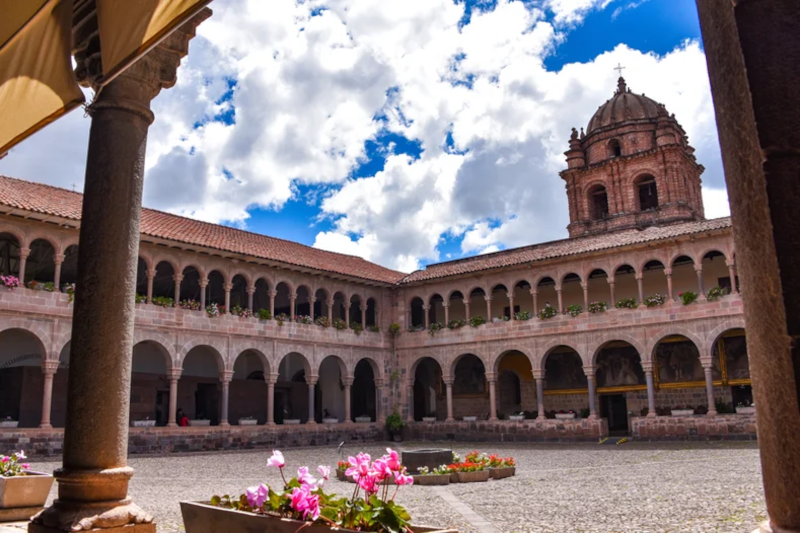
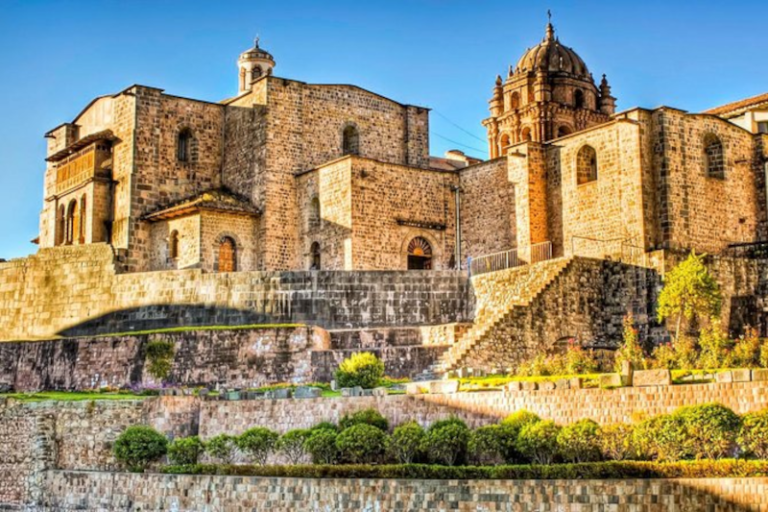
After the conquest, the Dominican Order built the Church and Convent of Santo Domingo right over Qoricancha. It’s a blunt statement: new faith, new authority, new architecture—placed on top of the old.
Walking through the site now, you get this sharp contrast. Inca stone: dark, polished, tight seams, calm confidence. Spanish colonial construction: white walls, arches, painted surfaces, a different kind of drama. The result is what many call mestizo style—part European, part Andean, and fully shaped by conflict.
It’s tempting to treat this as a simple “then vs. now” story. But it’s messier. People adapted. Beliefs blended. Power stayed uneven. You can dislike the history and still be fascinated by what it produced. That’s a mild contradiction, sure—but it’s also human.
Let’s nerd out for a minute: stonework that behaves in earthquakes
This is the part where even non-history people start taking photos of… walls. Because the stonework is unreal.
Qoricancha has some of the best examples of ashlar masonry in the Andes: stones cut so precisely you can’t slide a coin between them. No mortar. Just fit. And the fit holds.
Here’s what’s going on, in plain terms (with a little builder talk):
- Trapezoid shapes in doors and niches add stability. Straight rectangles look clean, but they don’t “work” as well when the ground moves.
- Walls lean slightly inward, like they’re bracing themselves.
- Stones have tiny curves and grips so they settle back into place instead of cracking apart.
Cusco sits in an active seismic zone. So earthquakes aren’t a “maybe,” they’re a “when.” In big quakes like 1650 and 1950, parts of the colonial structures took heavy damage. Meanwhile, the Inca foundations kept their composure. If you’ve ever seen a modern office building designed to sway during tremors, you’ll get the idea. It’s not stubbornness; it’s smart movement.
And yes, I know—this can start to sound like we’re romanticizing the past. But giving credit isn’t the same as pretending the Incas were magical. They were careful observers with strong craft systems, and they had a lot of practice.
The sky as a calendar (and a bit of a boss)
Qoricancha wasn’t only a temple. It was also a place for sky tracking. The Inca watched the Sun, the Moon, and key star groups closely because those patterns told them when to plant, when to harvest, and when to hold ceremonies.
Openings and sightlines in the complex were set up to match key moments of the year—solstices and equinoxes, plus the Pleiades. One classic story: at a certain time, sunlight would pass through a specific opening and strike a sacred focal point, marking a turning of the year. Whether every detail of that story holds up in every retelling, the larger point does: they planned these spaces with the sky in mind.
This connects directly to Inti Raymi, the Festival of the Sun, held around June 24. If you’re traveling in the dry season (roughly May to September), you’ll notice Cusco buzzing more than usual—extra visitors, street vendors, last-minute tour bookings, the whole scene. The modern reenactment is a big event, and it often begins near Qoricancha before moving toward Sacsayhuamán.
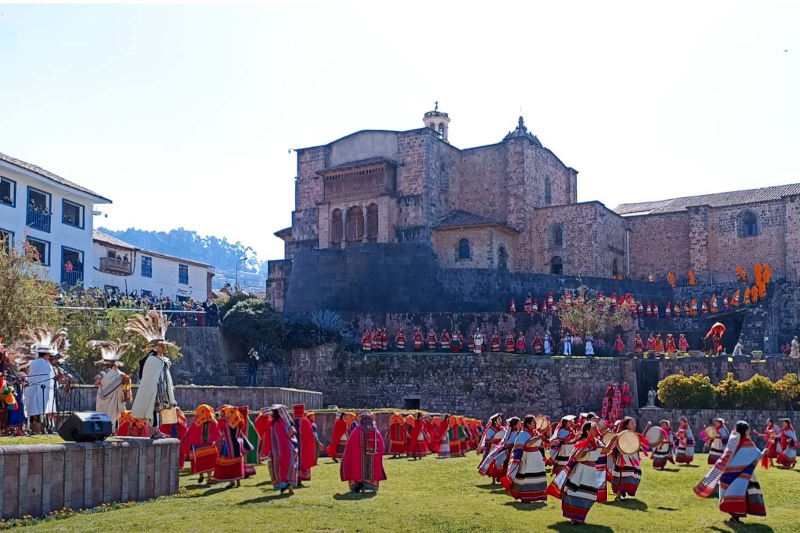
And honestly, that’s one of the coolest things about the site: it’s not frozen. It still sits inside living tradition, tourism, and local pride. Sometimes that mix is awkward. Sometimes it’s beautiful. Often it’s both.
Visiting tips (the practical stuff, with zero guilt)
If Qoricancha is on your list—and it should be—here are a few tips that can save time and friction.
Tickets: the small surprise
The Boleto Turístico del Cusco covers many major sites around the region, but Qoricancha usually requires a separate ticket. Prices can change, so treat any number you saw online as “ballpark,” not a contract.
A guide helps more than you’d think
There isn’t much signage, and the good details are easy to miss. A local guide can point out the chambers, explain which deities were honored where, and translate the stonework from “pretty” to “oh wow.” If you work in any field where context matters—design, engineering, ops—you’ll appreciate that upgrade.
Timing: pick your vibe
- Early morning: cooler air, fewer groups, and soft light on the stone.
- Late afternoon: calmer pace, longer shadows, and a moodier feel.
Don’t miss these details
- The curved exterior wall along Avenida El Sol—one of those “okay, I get it now” moments.
- Inca niches and doorways inside, with that trapezoid form repeating (yes, repeating on purpose).
- The courtyard where you can look around and see the layers: Inca base, colonial structure, modern city beyond.
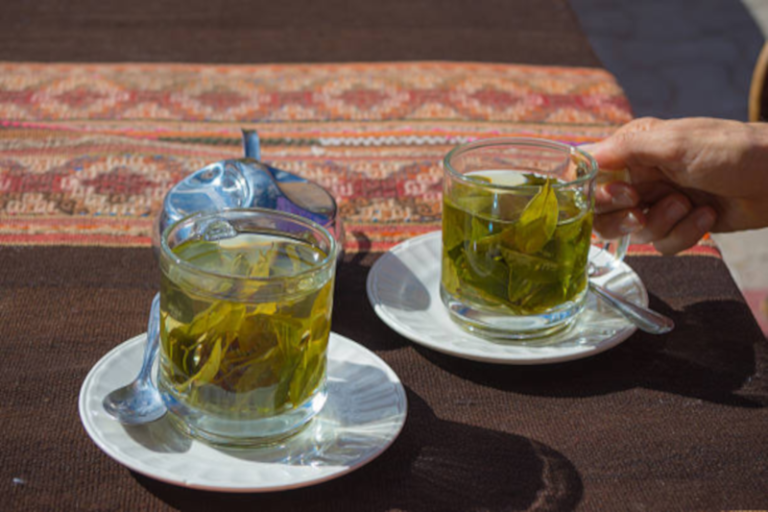
Quick digression that matters: Cusco’s altitude is no joke. If you’re fresh off a flight, take it easy. Drink water. Try coca tea if you’re comfortable with it. And don’t schedule Qoricancha, Sacsayhuamán, and a marathon-like city walk all on day one unless you enjoy suffering for the plot.
Final thoughts: a crossroads you can actually stand in
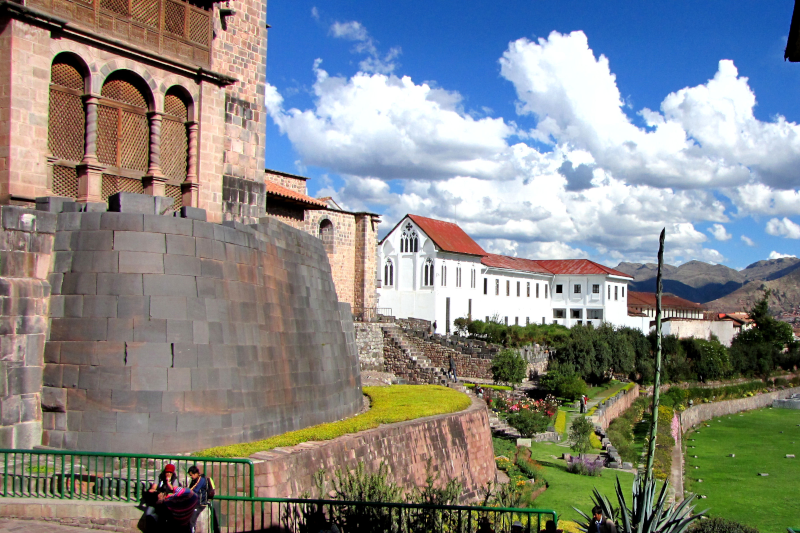
Qoricancha is a rare kind of place. It’s not just “old.” It’s layered. You get Inca belief and imperial planning, then conquest and rebuilding, then modern tourism and memory—all in one compact site.
If you visit without context, you’ll still enjoy it. The stone alone carries the day. But if you show up knowing even a little—about Inti, about the gold that was taken, about why trapezoids show up everywhere—you’ll feel the weight of it. Not in a heavy, preachy way. More like a quiet, human way. The kind that makes you pause and think, How many lives passed through here, and how much did this place ask of them?
And when you step back out into Cusco, with traffic and tour groups and the smell of grilled corn in the air, that question follows you for a while. It should.