
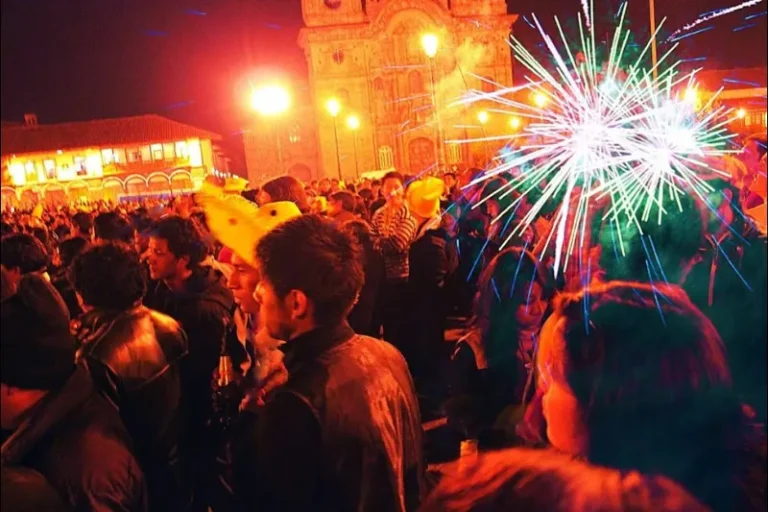
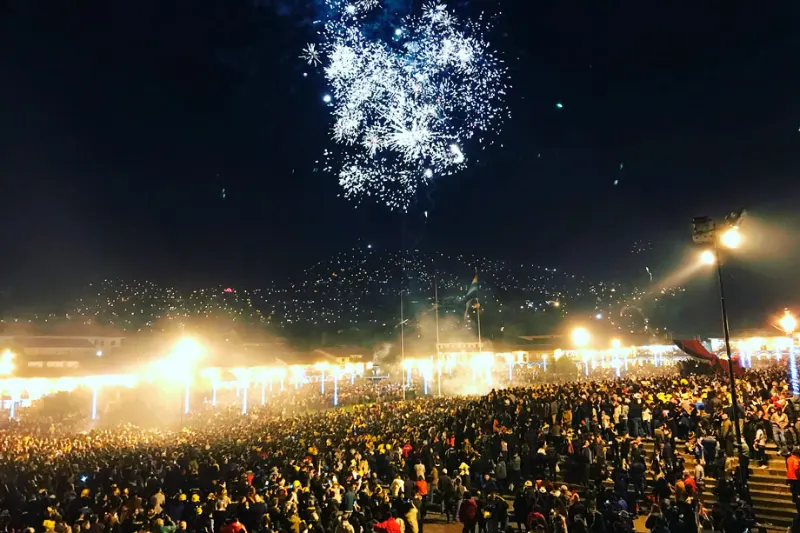
New Year’s Eve in Cusco is its own thing entirely. The Plaza de Armas starts filling up hours before midnight, woodsmoke and roasting corn in the air, neon yellow already visible across the whole square before the bells even ring. People who show up expecting the typical countdown experience leave with something they didn’t anticipate. Inca tradition and Spanish Catholic influence both land in the same night, not cleanly separated but genuinely tangled together after centuries of coexistence. Most travelers haven’t seen anything quite like it.
The night runs on cábalas, the local superstitions and customs that dictate what happens and when. Standing back and watching isn’t really how it works here. Locals pull visitors into the rituals and by the end of the night most people have done things they never expected to do on December 31st.
Why You Must Wear Yellow Underwear to Survive an Andean Midnight
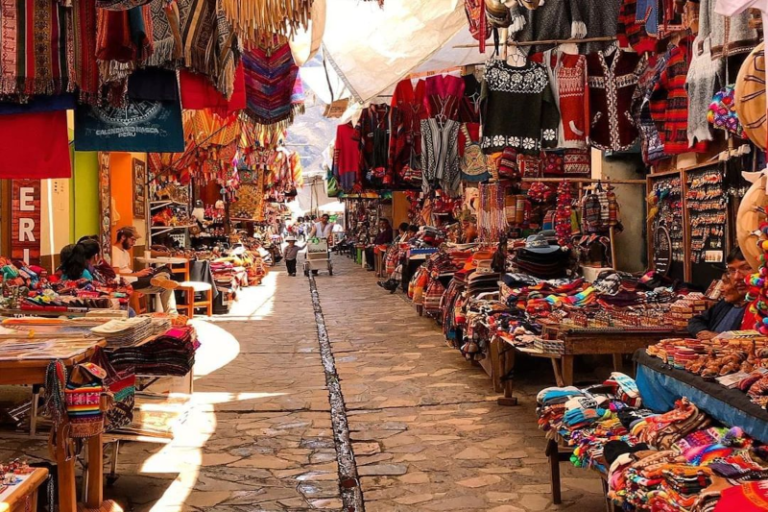
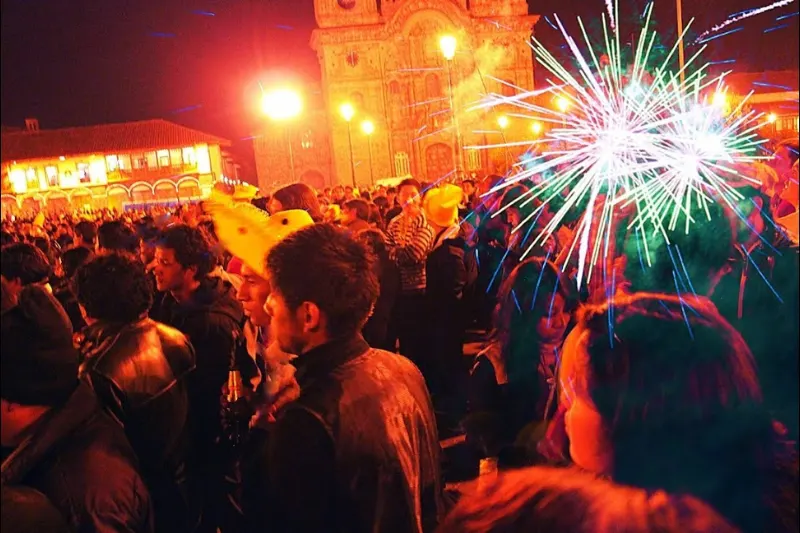
Cusco’s street markets on December 31st are impossible to miss. Yellow garments stacked everywhere, vendors lined up with neon piles of clothing that take over the visual field entirely. This didn’t start as a quirky tourist attraction. The color ties directly to Inti, the Inca sun god, and for people who grew up with this tradition, wearing yellow against the skin captures solar energy and carries it into the next twelve months.
New clothing specifically. Not something worn before. That requirement exists because starting fresh means actually shedding the previous year rather than just claiming to. Yellow accessories like hats or scarves register as participation, but locals consistently point to the hidden layers as where the real luck sits. Once the clothing is sorted, the physical part of the night begins, and at these temperatures after dark, the extra layer isn’t entirely unwelcome anyway.
Clockwise Around the Fountain: How an Empty Suitcase Grants Your Travel Wishes
The cathedral bells starting their countdown changes the energy in the plaza fast. Luggage appears from everywhere and people start running. From any distance it reads as chaos but the intention behind it is specific. Laps around the plaza with a suitcase connect to travel luck for the year ahead, and clockwise isn’t arbitrary. It follows the sun’s daily arc, which carries cosmological weight in Andean tradition that goes back centuries.
Thirty thousand people in one square requires some basic strategy. The ritual itself breaks down simply:
- Acquire a suitcase (real or miniature).
- Wait for the cathedral bells.
- Run clockwise around the central fountain 7 or 12 times.
After finishing the laps and actually catching a breath, food becomes the priority. Grapes and roasted guinea pig are next in the sequence.
Twelve Grapes and Guinea Pig: Navigating the New Year Feast
Twelve grapes, twelve bell chimes, twelve wishes. The timing is fixed and there’s no casual version of it. One grape goes down with each chime and the wishes happen simultaneously. Being in position at the plaza when the bells start means dinner has to wrap up by 11:00 PM at the latest. Restaurants near the square with any kind of view book out months in advance and nothing opens up last minute during this period.
Before the countdown, cuy is the meal. Roasted guinea pig, prepared the same way it has been in Andean kitchens since before the Spanish arrived. Chicha alongside it, fermented corn drink that locals have been making for just as long. The feast has a practical side too. Cold night, physical activity coming, thin air throughout. Eating well before midnight matters. Heavy food and drinking at this altitude still need pacing though or the body starts protesting well before the night is over.
Surviving the High-Altitude Party: Rain, Soroche, and Safety Tips
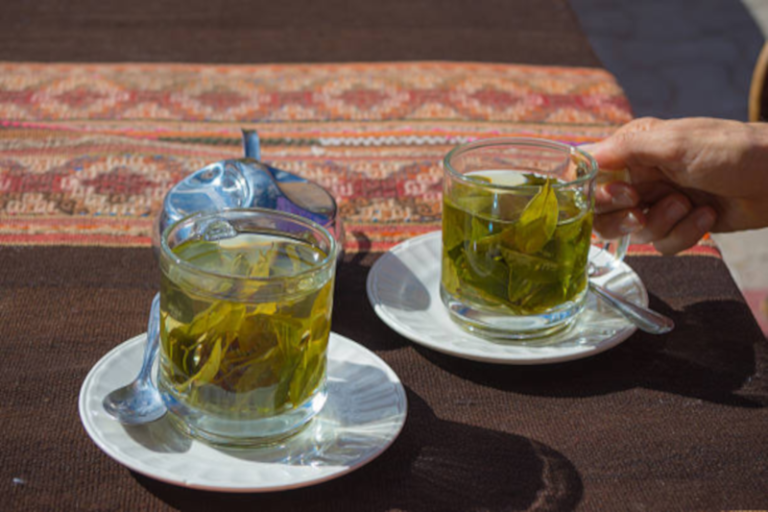
Walking out of a warm restaurant into the plaza at 11,000 feet is a physical adjustment that happens whether someone is prepared for it or not. Even travelers who’ve been in Cusco for several days notice the thin air more when they’re also staying up late, drinking, and running around a cobblestone square. Soroche, altitude sickness, manages itself better with consistent water and coca leaf tea throughout the night. Locals have been alternating drinks this way for generations and the habit exists for a reason.
Rain is not a maybe in December. Cusco averages around 150mm that month and midnight downpours show up regularly. Dressing for that reality rather than hoping it won’t happen makes the difference between a good night and a miserable one:
- Lightweight waterproof poncho
- Non-slip shoes for wet cobblestones
- Small oxygen canister (oxishot)
- Minimal cash in zipped pockets
Crowds that size require awareness. Keeping a group together takes active communication and not just assuming everyone is still nearby. Valuables secured before entering the plaza, not after noticing the density of the crowd.
Securing Your Spot: From Balcony Views to Machu Picchu Bookings
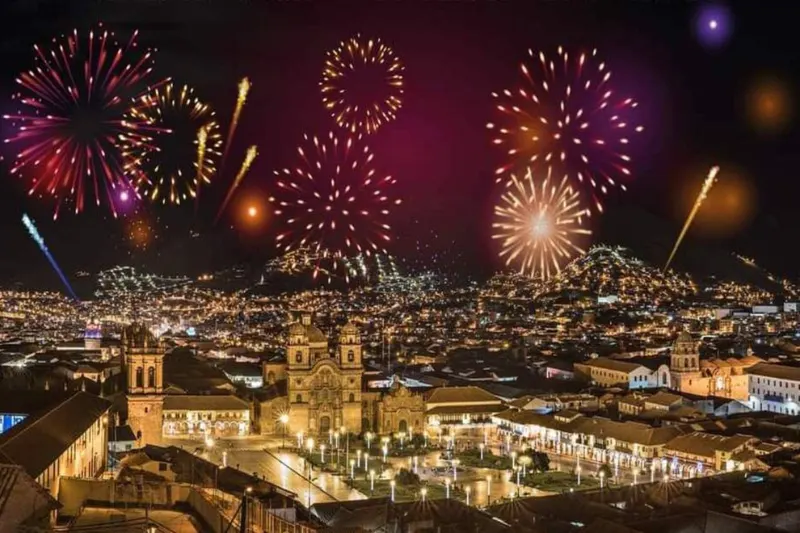
Lima and Cusco approach New Year’s from completely different angles. Lima goes modern, coastal, nightclub-oriented. Cusco carries the weight of its history into the night and the atmosphere is shaped by that. Neither is wrong, they’re just different experiences. For people who want to witness the plaza without being pressed into the crowd, a balcony is the answer. Hotels and restaurants with elevated views of the square offer a clear sightline over the fireworks and the running crowds below without the physical chaos.
January 1st catches people off guard regularly. Drivers take the day off, public transport cuts back significantly, and spontaneous travel plans fall apart quickly. Booking transit before December 31st is not optional. Machu Picchu runs the same way during holiday season. Entry tickets and train seats disappear months ahead of peak dates and there’s no last-minute availability to count on.
Starting the New Cycle: An Unforgettable Cusco NYE
Underneath all the running and noise and yellow clothing, there’s something quieter holding the night together. The despacho ceremony happens without much fanfare, locals making an offering to Pachamama for the year that’s ending before the new one takes over. Most visitors walk past it without realizing what they’re seeing. But it’s there, and it’s the part of the night that locals treat with the most seriousness.
Practically speaking, the night goes better with preparation done in advance. Yellow clothing before the market runs out of good options, water carried throughout, a realistic read on how crowded and cold the plaza gets after midnight. None of it is difficult to manage. And the experience that comes out of getting those details right is the kind that people describe to other travelers for years afterward.