
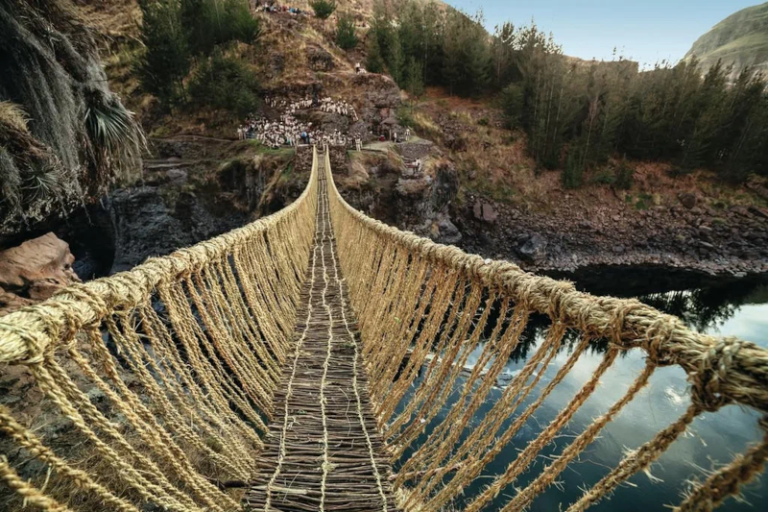
There’s a moment—right before you step out—when your brain does a quick safety check. You look down, you hear the river. You notice the “bridge” is… grass. Braided grass. And you think, Wait, people really cross this?
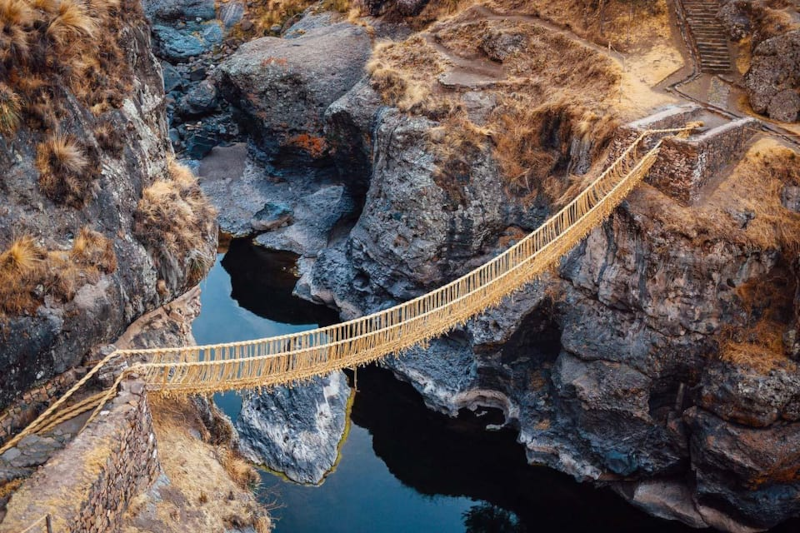
They do. And not as a museum trick, either. High in Peru’s Andes, four Quechua communities rebuild the Q’eswachaka bridge every year by hand, the way their grandparents learned it, and their grandparents before that. It’s practical (grass wears out). It’s sacred (the land is treated like a partner, not a backdrop). And it’s weirdly familiar if you’ve ever worked on a project with a hard deadline—like an annual maintenance sprint with a ceremonial kickoff.
Before we wander, here’s a quick outline so we keep the thread in our hands.
Quick outline (so we don’t lose the thread)
- What Q’eswachaka is and where it is
- How a “grass bridge” works (simple materials, smart physics)
- Why it’s rebuilt every year: weather, duty, belief
- The four-day rebuild: who does what
- How to visit (and not be a pain about it)
- What it teaches: renewal can beat “forever”
So what is Q’eswachaka, exactly?
Q’eswachaka (you’ll also see “Qeswachaka “) is a handwoven suspension bridge made from ichu grass. The Qeswachaka bridge spans a canyon above the Apurímac River in southern Peru. People often call it the last living Inca rope bridge tradition. The key word is living. It’s not a relic behind glass. It’s a working crossing that gets rebuilt, used, and rebuilt again.
The span is about 36 meters (118 feet). It hangs high over fast water. And it looks almost plain. But plain doesn’t mean weak. Plain can mean well-designed—like a clean checklist that keeps a complicated job from going sideways.
Where is the Q’eswachaka Inca bridge?
The Q’eswachaka Inca bridge, also known as the Qeswachaka inca bridge, sits in Canas Province, in the district of Quehue, around 160 kilometers (100 miles) south of Cusco. If your Peru trip is the classic “Cusco, Sacred Valley, Machu Picchu,” you won’t stumble onto it. You go on purpose. And that’s kind of the charm. It still belongs first to the communities who rebuild it.
How can grass hold a person? Here’s the thing.
Calling it a “grass bridge” makes it sound like a school craft table. It isn’t. This is serious engineering built around tension—pulling strength. The cables take the load the way a climbing rope does. The bridge can move, and that movement helps it survive.
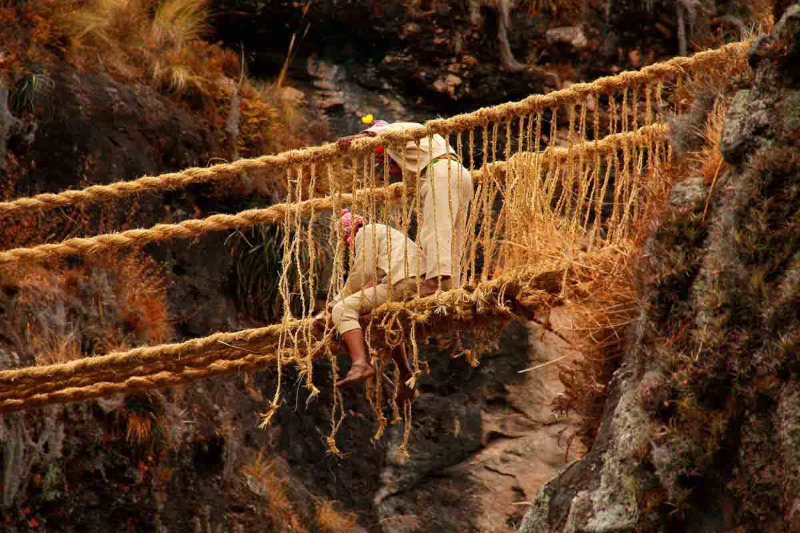
That sway you feel under your feet? It can be unnerving. But it’s also a feature. A stiff structure resists a shock. A flexible one absorbs it.
And if you want a modern analogy: it’s like a system with built-in slack. Not sloppy. Resilient.
Material “procurement,” Andes edition
The raw material is ichu, a tough high-altitude grass. In the days before the rebuild, families gather it, dry it, and prep it. You could call it supply chain work. But it’s also seasonal knowledge—where the grass grows best, when it’s ready, how it behaves once it’s soaked and twisted.
The process repeats on purpose:
- Fibers get twisted into thin cords.
- Cords get braided into thicker ropes.
- Ropes get combined into the main cables.
Repetition makes strength. Strand by strand. Rope by rope.
A bridge that’s temporary… and still enduring
This sounds like a contradiction, but it’s true: the bridge is not meant to last for decades. And the tradition has lasted for centuries.
Each year’s structure is new. The system is old. The knowledge transfer is the real “infrastructure.”
Why rebuild it every year? Maintenance is the easy answer.
Sun, rain, wind, and constant tension weaken plant fibers. A rope bridge has a clear service life. Rebuilding every year is visible, hands-on quality assurance.
But if it were only maintenance, steel would solve it. Steel exists. Concrete exists. So why keep doing it this way?
Because the rebuild isn’t only a repair job. It’s also a commitment ceremony. A duty. A public promise that the community still functions.
Minka: the work model behind the miracle
The rebuild runs on minka (or minga): communal labor for the common good. Four communities—Huinchiri, Chaupibanda, Choccayhua, and Ccollana Quehue—show up and do their part. Everyone knows the deliverable. Everyone knows the timeline. And everyone knows the risks.
Anyone who has shipped a project with tight dependencies will immediately recognize this logic. Without the cables fully prepared, weaving can’t even start. Furthermore, if the anchors aren’t completely secure, the rest of the build is entirely pointless.The difference is the “stakeholders” here aren’t a client list. They’re your neighbors.
The spiritual side (quiet, serious, and not for show)
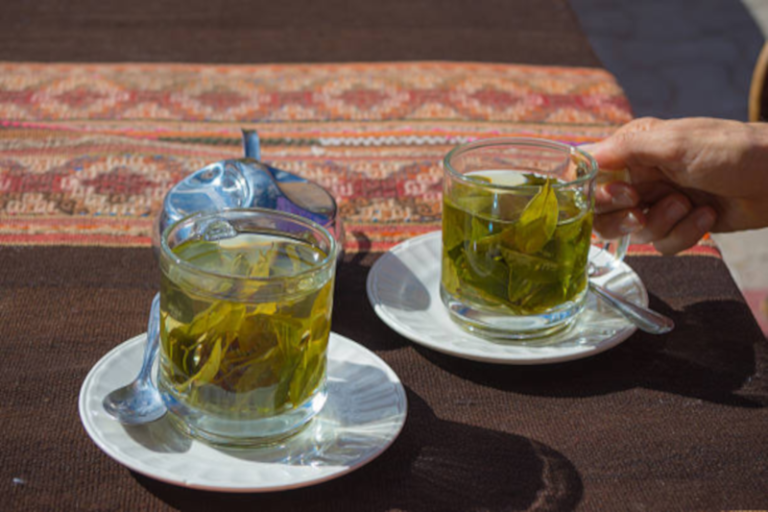
Before the first major work begins, an Andean ritual specialist (often called a paqo ) leads offerings to Pachamama (Mother Earth) and the apus (mountain spirits). Coca leaves, corn, and chicha (a fermented corn drink) are offered with care. It’s not a tourist performance. It’s how many Andean communities relate to land, water, and risk.
And yes, that can feel far from a typical U.S. frame of reference. But we have our own rituals around big work—groundbreakings, ribbon cuttings, even the “we’re live” moment on a product launch call. We do ceremony when something matters. Here, it matters in a very literal way.
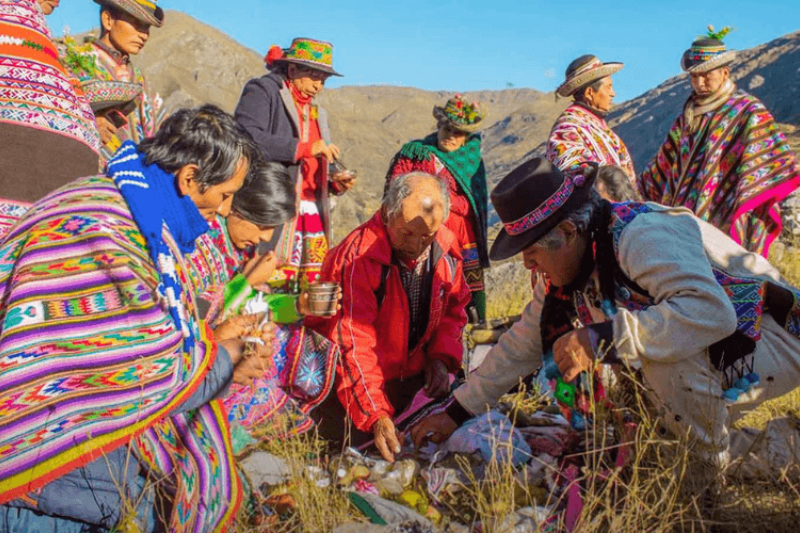
In 2013, UNESCO recognized the annual rebuilding of Q’eswachaka as Intangible Cultural Heritage. That title sounds official—and it is—but the point is simple: this knowledge is worth keeping alive. Many people speak of it as “Woven History: The Annual Resurrection of Q’eswachaka”—a living practice rather than a frozen relic.
The four-day rebuild (like a live workshop, but with a canyon)
The rebuild usually happens in June, often during the second week. That’s dry-season territory in the Andes. Days can be bright. Mornings can bite. Weather can still change fast because mountains don’t ask permission.
Day 1: Rope day—rhythm, teamwork, a lot of hands
Women and girls twist and braid smaller cords. Men combine those cords into thicker ropes, and then into the main cables. It’s labor-heavy. It’s also social. People talk, joke, share food, and keep the pace.
Here’s a small lesson modern managers sometimes forget: morale isn’t a nice extra. It’s load-bearing.
Day 2: The old bridge goes, the new cables arrive
The old bridge is cut loose and drops into the river below. It’s dramatic. It’s also the plan. The materials are natural, so the river carries them away and they break down.
Then the new main cables are pulled across the canyon. This looks like pure grit. Teams haul and brace and coordinate. No machines doing the thinking. Just people, timing, and trust.
Day 3: Weaving day—where the specialists take over
Master bridge weavers, often called chakaruwaq, lead the build. They weave the walking surface, add side supports, and tie everything tight. Two teams often start from each end and work toward the middle.
It feels a bit like watching a highly skilled trade crew on a deadline: calm hands, quick checks, quiet confidence. The kind of competence you can’t fake.
Day 4: Celebration (and yes, people cross it)
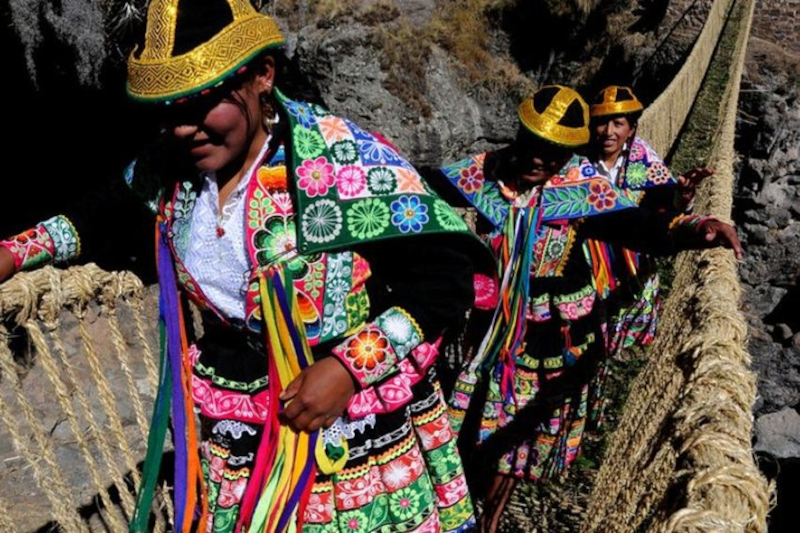
Once the bridge is complete, there’s music, dancing, and a community feast. Then the bridge opens and people cross. Not everyone will want to. Fair. But if you do, you’ll feel every step. The bridge bounces. The handrails press into your palms. The river keeps roaring below like it’s got opinions.
Then you reach the other side and laugh. Relief has its own sound.
Planning a Q’eswachaka tour (without being “that tourist”)
Here’s the thing: this isn’t a theme park. It’s a working site and a sacred tradition. Visitors are welcome, but respect is the real entry ticket.
Getting there from Cusco
Most travelers visit from Cusco as a long day trip by car—often 3.5 to 4+ hours each way, depending on road conditions and stops. Public transport is possible, but it’s a multi-transfer puzzle that can eat your whole day.
For many people, booking a guided Q’eswachaka tour is the cleanest option. You’re paying for logistics, local context, and a driver who knows the roads. (If you’re the DIY type, download offline maps on Google Maps before you leave Cusco. Signal can be spotty.)
Altitude: the quiet risk nobody brags about
The area sits around 3,700 meters (12,100 feet). If you come from sea level and try to power through, you might feel awful—headache, nausea, fatigue, the whole deal.
Give yourself a couple days in Cusco or the Sacred Valley first. Hydrate. Rest. Take it slow. The mountain has a way of humbling the “I’m fine” crowd.
What to pack (keep it simple)
- Layers: cold mornings, strong midday sun
- Hat + sunscreen: UV hits harder at altitude
- Water and a snack
- Good shoes: stable soles, decent grip
Photos, money, and basic courtesy
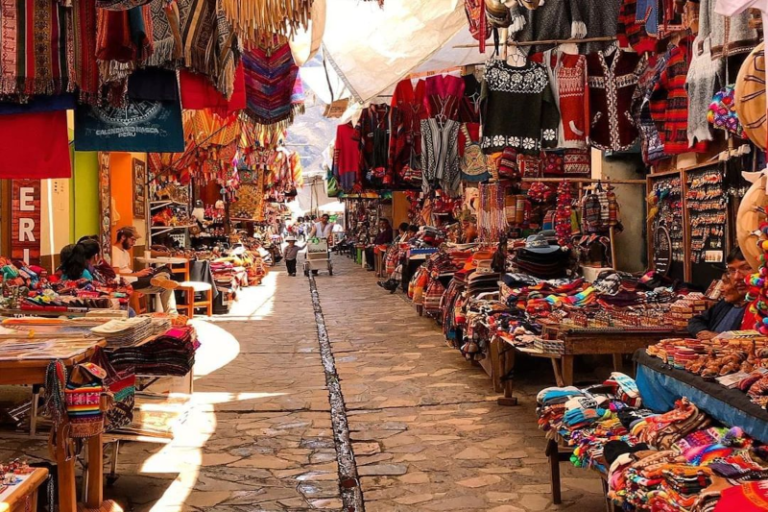
Ask before photographing people up close. If there’s a small fee to cross, or if locals are selling textiles or snacks, carry small bills in Peruvian soles. That money supports the communities doing the work.
And one more small note: it’s easy to label this “ancient” like it’s frozen. But it isn’t frozen. It’s active. It adapts. That’s why it survives.
A short tangent that matters: renewal is a strategy
A lot of modern culture worships “permanent.” Steel. Concrete. Stuff built to outlast us. Q’eswachaka makes a different argument. It says: rebuild what wears out. Keep the knowledge fresh. Keep the team trained.
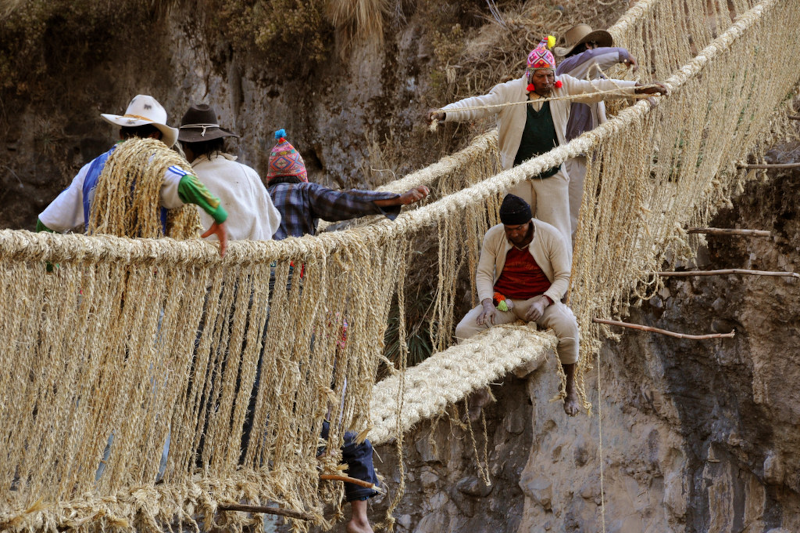
That idea shows up in other places, too. Think about the “right to repair” movement, or the way some towns restore old barns instead of replacing them with something shiny. Or think about software: patches, updates, and planned maintenance aren’t signs of failure. They’re the price of staying functional.
So yes, this bridge is made of grass. But it’s held up by something tougher: routine, skill, and community.
Final thoughts: a bridge you can walk across, and a lesson you can keep
The Q’eswachaka bridge is a crossing over a canyon, sure. It’s also a crossing between ideas—durability and renewal, engineering and belief, individual effort and shared duty. It doesn’t choose one. It carries all of it.
If you find yourself near Cusco in June and you’re curious—curious enough to take the long road—go see it. Watch the ropes tighten. Listen to the river. And let the place ask you one quiet question: What do you rebuild each year, and why?