
June 24th does something to Cusco that no other day manages. People are in the streets before sunrise, color is everywhere before most visitors have had breakfast, and the city runs on a completely different register than the rest of the year. Inti Raymi has sat at the center of the Andean calendar for centuries, tied directly to the sun, the winter solstice, and what survival actually meant for a civilization that depended on both.
Travelers who land in Cusco that day without having planned for it consistently describe it as the thing they remember sharpest from the whole trip. Getting familiar with where it comes from before showing up changes how much of it actually lands.
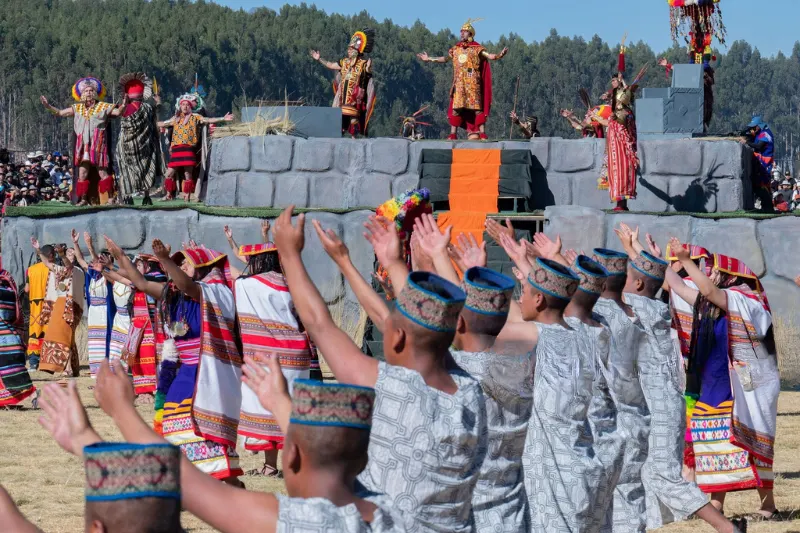
The Spiritual Heart of the Andes
Inti wasn’t a secondary figure in Incan religion. Supreme deity, celestial father of the Sapa Inca, the force the entire agricultural system ran on. When the Southern Hemisphere winter solstice arrived and days hit their shortest point, the ancient Inca weren’t observing an astronomical curiosity. They were facing a real threat. A weakened sun meant weakened crops and a civilization that couldn’t afford that outcome.
The ceremony grew out of that fear directly. Fasting stretched across days, communal feasts followed, llamas were sacrificed and their organs read for signs about what was coming. The Spanish banned it in the 16th century and pushed Catholic observance as the replacement. Communities ignored that as much as they could and kept fragments of the festival alive across generations. What runs today in Cusco is a reconstruction built from those surviving pieces.
The Three Stages of the Celebration
Three locations carry the day, each one different enough that moving between them feels like attending separate events that happen to connect.
- Qorikancha (The Temple of the Sun): The ancient sun temple is where things begin, around 8:00 AM. The actor playing the Sapa Inca greets the first light of the morning here. Crowd is smaller than later, atmosphere is closer and quieter, and the tone of the whole day takes shape before the larger stages absorb everything into spectacle.
- Plaza de Armas (Huacaypata): Procession works through cobblestone streets into the historic center. Sapa Inca performs the Coca Rite and addresses the actual current mayor of Cusco in the same ceremony. Centuries-old ritual and present-day civic life running simultaneously, which lands stranger and more interesting than any description prepares for.
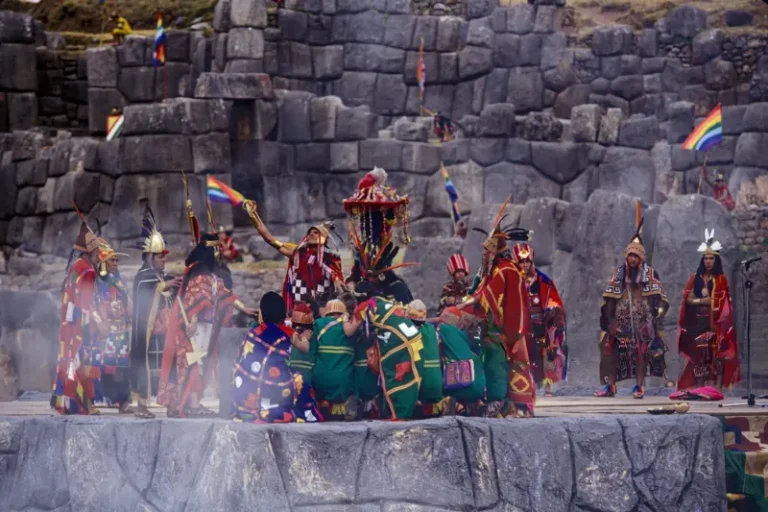
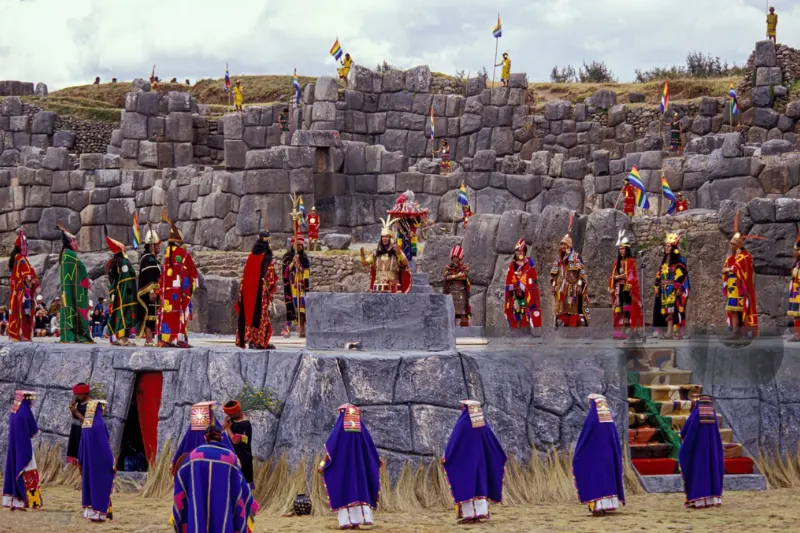
- Sacsayhuamán: The procession climbs to the fortress and the day peaks here. Primary address from the Sapa Inca, simulated llama sacrifice from the high priest, reading of the Andean future from the animal’s heart. Stone walls holding the sound in from every direction, the largest crowd of the day, and everything the earlier stages were building toward arriving at once.
Experiencing the Magic: Sights and Sounds
Drums, Andean flutes, and pututu conch shells going simultaneously across a crowd that size is a sound without a clean equivalent. Performers arrive from the four suyos, the ancient territorial regions of the Inca Empire, each group carrying rhythms and movement styles specific to their origin. The regional differences read clearly even from a distance.
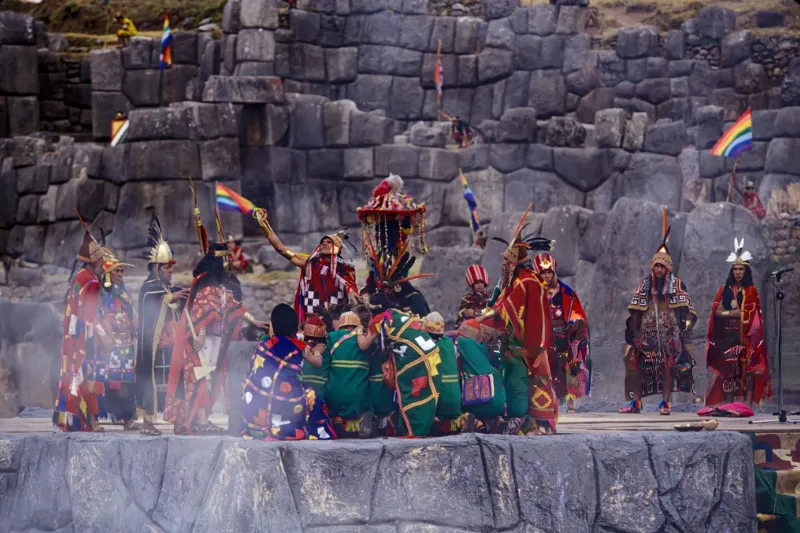
The costumes hold up to close attention in ways that matter. Deep saturated woven ponchos, headdresses built from macaw feathers, gold and silver chest plates angled differently as the afternoon sun moves. The craftsmanship is obvious up close and the procession functions as a moving archive of traditional Andean dress. Being inside it registers differently than any photograph taken from the edge of it.
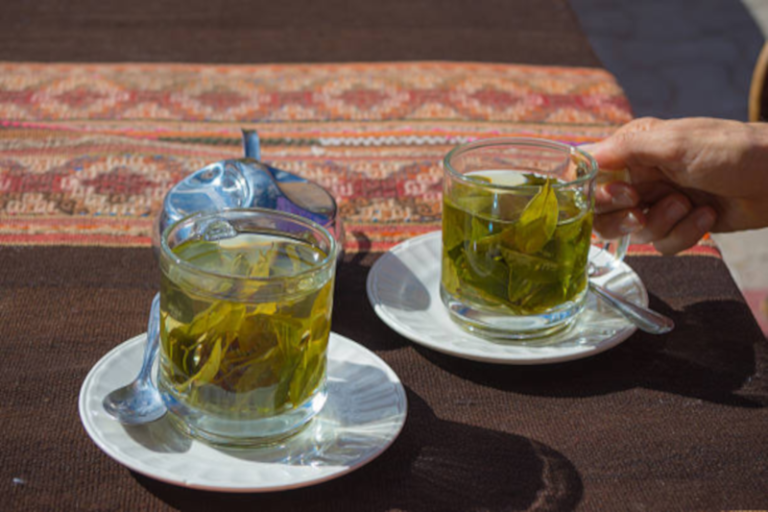
Offerings to Pachamama appear at multiple points through the ceremony. Coca leaves, chicha, native crops placed deliberately rather than casually. The connection between Andean communities and the land isn’t background decoration for the festival. It’s what the festival is actually about underneath everything else being performed.
Practical Guide: Planning Your Visit
June in Cusco runs dry and clear during the day, with a high-altitude sun that’s stronger than it appears. After sunset temperatures fall fast and the gap between afternoon and evening is bigger than most people pack for. The city starts filling noticeably before the 24th and accommodation doesn’t free up quickly after.
- Secure Your Spot: Qorikancha and Plaza de Armas morning events are free and visible from the streets without tickets. Sacsayhuamán requires a ticket purchased months ahead through official municipal websites or authorized agencies. Leaving this as something to handle closer to the date reliably results in missing the main event.
- Navigating the City: Getting to Sacsayhuamán from Plaza de Armas on foot means 30 to 40 minutes uphill at over 11,000 feet. Real climbing at that elevation with hours of standing ahead. A registered taxi or guided transport with transfers included solves the problem without costing energy needed later in the day.
- Alternative Viewing Areas: Hillsides around the fortress and the Cristo Blanco area fill early with locals and travelers who didn’t secure grandstand tickets. Binoculars are necessary from that distance, not a nice addition. Arriving by 8:00 AM matters for position. Water and sun protection at this altitude are required, not precautionary.
- Accommodation Strategies: Booking from January for June is not excessive for this specific event in this specific city. Hotels close to Plaza de Armas or in the San Blas neighborhood keep the morning stages walkable, which is a real advantage when the day starts before most people would naturally be awake.
Beyond Cusco: A Continental Celebration
Cusco carries the most recognition but the festival reaches further. Ecuador’s version in Otavalo and Cotacachi runs on different terms, purification rituals at sacred waterfalls, plaza dancing sustained across multiple days, focus placed on living indigenous identity rather than historical reconstruction of Incan ceremony. Same origin, different shape in practice.
Both versions survived because communities kept them running through extended periods when outside institutions were actively working to end them. That history doesn’t sit separately from the celebration. It’s present in the room the entire time the drums are going.
Conclusion
Inti Raymi wasn’t constructed for outside audiences and the bones of it show that clearly. Pachamama offerings placed mid-ceremony, a Sapa Inca speaking to ancient gods and a sitting modern mayor inside the same performance, a festival that got banned for centuries and survived anyway because people refused to stop practicing it. None of that is a tourism product. Getting tickets sorted months out, arriving before the crowd locks the city down, and actually watching rather than spending the day photographing it produces something specific and lasting. Drums bouncing between the stone walls of Sacsayhuamán with the solstice sun directly overhead is the kind of memory that stays sharp long after the rest of the trip softens into a general impression.